Author

Elizabeth Shipe

Browsing

Workforce demand rarely follows a predictable pattern. A manufacturing unit may suddenly receive bulk orders; a retail outlet may face festive rushes, or a logistics company may need extra hands during peak delivery cycles. Hiring permanent employees for short-term needs often leads to unnecessary overheads. This is where temporary staffing services provide a practical alternative.

Organizations across India are steadily integrating flexible hiring models into their workforce plans. By using structured temporary staffing solutions, companies gain access to skilled workers without committing to long-term employment contracts. This flexibility supports continuity without straining operational budgets.

Where Temporary Staffing Helps

Temporary staffing is not limited to emergency hiring. Many organizations plan their workforce around short-term and seasonal demands. Instead of stretching existing teams or rushing recruitment, companies use temporary staffing to maintain workflow stability.

Common business scenarios where temporary staffing proves useful:

  • Managing seasonal demand spikes in retail and e-commerce
  • Supporting manufacturing during large production cycles
  • Filling roles during employee leave or absence
  • Handling short-duration projects requiring specialized skills
  • Assisting warehouses and logistics hubs during high-volume periods

These use cases show that temporary staffing services are no longer seen as backup options. They are now part of structured workforce planning across multiple sectors.

Another noticeable advantage is administrative relief. Payroll processing, compliance documentation, and onboarding formalities are often managed externally, saving valuable time for internal HR teams.

Why Agencies Are Preferred

Recruitment timelines can slow down operations when urgent staffing needs arise. Many organizations prefer working with temporary staffing agencies because they already maintain pools of pre-screened candidates. This reduces hiring delays and ensures faster workforce deployment.

Several factors contribute to the growing reliance on staffing partners:

Benefits businesses often experience:

  1. Faster Hiring Cycles Pre-verified candidate databases allow quicker role fulfillment.
  2. Reduced Hiring Risks Employers can assess worker performance before offering long-term opportunities.
  3. Better Compliance Handling Staffing partners typically stay updated with labor laws and statutory obligations.
  4. Cost Optimization Companies avoid expenses associated with long-term employee benefits when hiring for short durations.

These advantages explain why structured temporary staffing solutions are gaining traction across sectors such as hospitality, construction, healthcare, and retail.

Temporary vs Permanent Hiring

Organizations often evaluate multiple hiring strategies before making workforce decisions. A simple comparison highlights how flexible hiring models differ from traditional recruitment methods.

Hiring Factor Temporary Staffing Permanent Hiring
Hiring Time Faster Slower
Workforce Flexibility High Limited
Cost Commitment Short-term Long-term
Administrative Effort Often outsourced Internal handling
Risk Exposure Lower for short needs Higher for uncertain demand

Businesses working with experienced temp staffing companies in India often report smoother staffing adjustments when operational demands change suddenly.

Selecting the right staffing approach depends largely on operational timelines and workload consistency. Companies that anticipate frequent changes in workforce demand often find temporary staffing more efficient.

Choosing the Right Partner

Choosing among multiple temp staffing companies in India requires careful assessment. A mismatch between business needs and staffing capabilities can lead to delays or operational gaps.

Key checkpoints to review before finalizing a staffing partner:

  • Industry familiarity Providers familiar with sector-specific roles tend to deliver more suitable candidates.
  • Scalability capacity for the ability to quickly increase or reduce workforce size is essential during demand fluctuations.
  • Technology support Digital tools for attendance, payroll, and reporting to improve accuracy and transparency.
  • Response time Fast communication and candidate replacement capability help maintain workflow continuity.

Organizations that prioritize these factors often experience fewer disruptions and better workforce reliability. Over time, structured temporary staffing services become a dependable part of operational planning rather than an occasional fix.

Planning for Workforce Stability

Flexible hiring models continue to influence how companies structure their teams. Temporary roles not only support short-term productivity but also offer opportunities to identify reliable talent for future requirements. Many organizations use temporary assignments as a trial phase before extending permanent offers to high-performing workers.

As industries expand into new regions and customer expectations continue to shift, workforce adaptability becomes a defining factor in operational success. Businesses that align temporary staffing, structured hiring practices, and regional workforce strategies are better positioned to manage growth without disruptions. Integrating these practices alongside broader hr services in Mumbai and other key commercial centers helps organizations maintain efficiency while responding quickly to changing staffing demands.

Key Takeaways

  • General servicing handles routine maintenance, but it does not remove deep internal contamination.
  • Steam cleaning targets internal components where dirt, mould, and grease accumulate over time.
  • The price of aircon steam cleaning is higher, but it addresses performance issues that basic servicing cannot fix.
  • Choosing the best air conditioning servicing depends on recognising when deeper cleaning is necessary.
  • Delaying steam cleaning can lead to higher repair costs and reduced system lifespan.

Introduction

Most air conditioning systems do not fail suddenly; they degrade due to a gradual build-up inside key components. Many property owners rely on general servicing as a default solution, assuming it covers all maintenance needs. In reality, general servicing is designed for surface-level upkeep. It does not address internal blockages, microbial growth, or accumulated residue within coils and drainage systems. This instance is where the decision between routine servicing and steam cleaning becomes critical. Knowing when to escalate from standard maintenance to a deeper intervention allows you to manage both performance and cost more effectively.

When Cooling Performance Drops Despite Regular Servicing

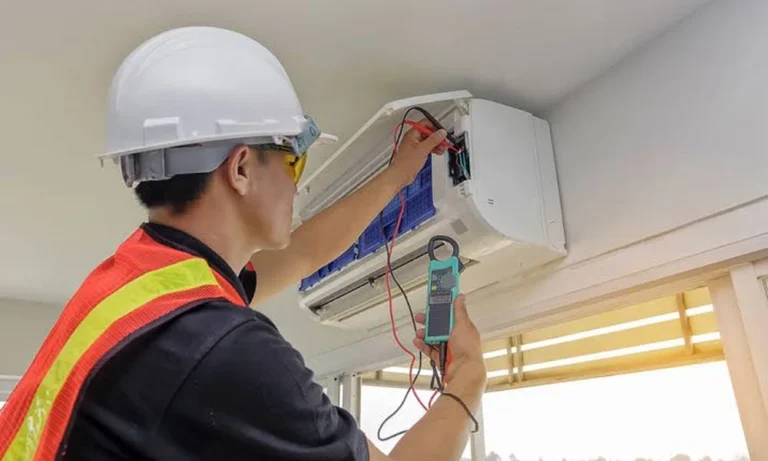
If your unit has been consistently maintained but still struggles to cool effectively, the issue is likely internal. General servicing typically involves cleaning filters, checking gas levels, and basic flushing. However, evaporator coils and blower wheels can still accumulate grime that restricts airflow and heat exchange. Steam cleaning uses high-pressure vapour to break down stubborn deposits within these components. Paying the price of aircon steam cleaning becomes a necessary step in such cases rather than an optional upgrade, especially if cooling inefficiency persists despite repeated servicing.

When There Is Noticeable Odour or Mould Growth

Persistent odours are a strong indicator of microbial contamination inside the unit. General servicing may temporarily reduce smell by cleaning accessible areas, but it does not eliminate mould embedded deep within coils or drainage trays. Steam cleaning penetrates these areas and removes bacteria, mould spores, and biofilm more effectively. That said, for environments where air quality matters, such as offices or residential bedrooms, this level of cleaning is not excessive but required. Selecting the best air conditioning servicing should include providers that can assess and recommend steam cleaning when hygiene issues are evident.

When Water Leakage or Drain Blockage Occurs

Water leakage is often linked to clogged drainage systems or excessive dirt build-up restricting water flow. General servicing may clear minor obstructions, but repeated leakage suggests a deeper blockage or sludge accumulation. Steam cleaning can flush out hardened debris and restore proper drainage pathways. Ignoring this condition and relying only on basic servicing increases the risk of internal damage and mould spread. The price of aircon steam cleaning reflects preventive maintenance in this scenario that avoids more costly repairs.

When the Unit Has Not Been Deep Cleaned for an Extended Period

Air conditioning systems that have operated for one to two years without deep cleaning will accumulate internal residue regardless of regular servicing. Dust, grease, and environmental particles settle in areas that are not reached during routine maintenance. Over time, this affects efficiency and component wear. Steam cleaning should be scheduled periodically to reset the system’s internal condition. Property managers aiming to engage the best aircon servicing in Singapore often integrate steam cleaning into long-term maintenance plans rather than treating it as a one-off service.

When Energy Consumption Starts Increasing

A gradual rise in electricity usage without a change in usage patterns often signals reduced system efficiency. Internal blockages force the unit to work harder to achieve the same cooling output. General servicing alone may not resolve this issue if the restriction lies deeper within the system. Steam cleaning improves airflow and heat transfer, allowing the unit to operate more efficiently. While the price of aircon steam cleaning is higher upfront, it can offset ongoing energy costs when inefficiency is the underlying problem.

Conclusion

General servicing remains essential for routine upkeep, but it has clear limitations. Steam cleaning becomes necessary when performance issues, hygiene concerns, or system inefficiencies go beyond surface-level maintenance. Paying for deeper cleaning at the right time prevents escalation into more serious faults. A structured maintenance approach that combines both services ensures consistent performance and cost control. Choosing the best aircon servicing in Singapore ultimately depends on recognising when standard servicing is no longer sufficient and acting before minor issues develop into major repairs.

Contact Newway and get targeted servicing that restores performance without unnecessary upselling.

When a policy update is finalised internally, most people assume the hard part is done. It rarely is. Getting that document to every relevant employee, confirmed, timestamped and version-controlled, is where organisations quietly lose ground on compliance without realising it until something goes wrong.

Hrms software handles bulk policy distribution at the workforce level, removing the dependency on manual forwarding, email chains, or department heads remembering to pass things along. The policy goes out. It reaches the right people. The system records who opened it, who confirmed it, and when. That confirmation record is not an administrative nicety. It is the difference between a compliance position that holds under scrutiny and one that collapses the moment an auditor asks for evidence. Distribution without a tracked acknowledgement is just file-sharing. What builds compliance readiness is the layer sitting on top of it, turning a sent document into a verified, timestamped record of receipt.

What breaks manual distribution?

Audit trails do not build themselves. Every time a policy goes out through manual channels, whether email, shared folders or printed memos, the record of who received it, which version, and whether they confirmed it becomes someone’s job to reconstruct later. That reconstruction is where compliance evidence breaks down when it matters most.

Three distribution failures appear consistently across large organisations:

  • Policies sent without version control leave employees confirming outdated documents, creating conflicting acknowledgement records across the same team.
  • Department-level forwarding introduces delays invisible at the HR level, meaning some groups receive critical updates days after others.
  • No centralised log means audit questions require manual reconstruction from email histories that are rarely complete.

Each of these is a structural problem. Bulk distribution through a managed system addresses all three without additional process overhead.

How does acknowledgement tracking work?

Acknowledgement tracking works in four sequential steps that close the gap between distribution and verified compliance.

  1. The policy is issued through a centralised system and delivered to defined employee groups based on role, department or location.
  2. Each recipient receives a prompt requiring them to open, read and confirm the document before the HR deadline.
  3. The system logs every response in real time, flagging employees who have not confirmed so that follow-up can happen before any cutoff passes.
  4. The completed acknowledgement record is stored with timestamps and version details, forming audit evidence that survives scrutiny without manual reconstruction.

A manual process leaves behind a lot of guesswork. A complete, specific compliance record can be produced without relying on anyone’s memory.

Building consistency over time

Compliance readiness is not a state achieved once and held. Policies change. Regulations shift. New employees join who were not present when earlier versions went out, and each moment creates a fresh distribution requirement that manual processes handle inconsistently.

Structured bulk distribution absorbs that ongoing volume without degrading. Role-specific policies reach relevant groups without manual segmentation each time a change occurs. New hires receive applicable policies during onboarding rather than weeks later when someone remembers to send them. Updated versions go to the right people automatically. The cumulative effect of running this consistently, across months and years and across departments, is what compliance readiness actually looks like in practice. Not a document that exists somewhere. A process that runs reliably and leaves a record.

Key Takeaways

  • Low refrigerant forces longer cooling cycles, which quietly increases energy use over time.
  • Uneven cooling across the room signals pressure imbalance caused by refrigerant loss.
  • Continuous compressor activity drives up electricity bills without improving comfort.
  • Early checks and timely servicing help prevent repeat issues and wasted energy costs.

Introduction

Cooling should feel effortless, yet rising electricity costs can quietly spoil that comfort. A drop in refrigerant changes how an aircon behaves, and the impact shows up in energy use before anything else feels obvious. Many homeowners consider an aircon specialist in Singapore when cooling dips, though the real issue lies in how the system struggles to maintain balance under reduced pressure.

How Low Refrigerant Changes Cooling Behaviour

Longer Cooling Cycles That Refuse to Settle

Expect the unit to run past its usual rhythm, with the compressor staying active far longer than it should. Desired temperatures take their time to reach, and the system keeps cycling without a proper pause, which pushes energy consumption higher. Situations like this usually prompt air conditioner troubleshooting to check if refrigerant levels are holding steady.

Patchy Cooling That Feels Inconsistent

Step into different parts of the room and the temperature may feel uneven, with certain areas lagging behind while others cool slightly faster. Reduced refrigerant limits how effectively heat moves through the system, so cooling becomes unreliable. A technician may recommend an aircon specialist in Singapore after confirming whether a leak has caused the imbalance.

The Hidden Energy Drain Behind the Scenes

A Compressor That Keeps Chasing a Target

Imagine a runner stuck in a loop, never quite reaching the finish line, and that is how the compressor behaves when refrigerant runs low. Continuous effort leads to higher electricity draw, even if the cooling result feels underwhelming. At this stage, air conditioner troubleshooting typically checks pressure levels to confirm what is happening inside the system.

Heat Transfer Losing Its Grip

Refrigerant carries heat out of the room, yet reduced levels weaken that process and slow everything down. The system keeps working, though the exchange of heat becomes less effective with each cycle. Consulting an aircon specialist in Singapore can restore proper flow, provided the system remains sealed after inspection.

Why Bills Climb Even with Normal Usage

Constant Signals from the Thermostat

Thermostats keep asking for cooler air when the set temperature stays out of reach, so the system continues running without proper rest. That repeated demand builds up electricity use over time, even when daily habits remain unchanged. Air conditioner troubleshooting can trace this pattern back to pressure issues caused by refrigerant loss.

Gradual Waste That Builds Over Time

Small inefficiencies rarely feel urgent at first, yet they stack up and lead to noticeable increases in cost. Cooling delays stretch further, and the unit works harder to keep up. Booking an aircon specialist in Singapore at the right moment can bring performance back in line, though the underlying cause still needs attention.

Practical Steps to Keep Energy Use in Check

Early Attention Keeps Costs Under Control

Catching weak cooling early helps prevent unnecessary strain on the system and avoids long periods of inefficient operation. Quick checks as part of air conditioner troubleshooting can identify leaks before they develop into recurring problems.

Pair Servicing with Refrigerant Checks

Routine maintenance keeps airflow smooth, yet refrigerant levels require separate attention to keep cooling stable. Arranging for an aircon specialist in Singapore alongside a proper inspection keeps the system running efficiently and reduces wasted energy from hidden faults.

Conclusion

Energy costs tend to rise when an aircon struggles to perform, and low refrigerant sits at the centre of that issue. Extended run times, uneven cooling, and constant compressor activity all contribute to higher electricity use while comfort remains inconsistent.

Contact Airple today to assess your unit, restore cooling efficiency, and keep your energy usage from climbing with every cycle.

Manufacturing precision determines consistency across every production cycle. Small variations often create noticeable performance differences in finished components. A reliable Transfer Molding Manufacturer ensures tighter tolerances during material flow. Controlled processes help maintain dependable output across demanding industrial applications.

Consistent Material Flow Ensures Stability

Transfer molding controls resin movement with remarkable consistency. This approach reduces internal voids within complex shapes. Uniform pressure application improves structural integrity across components. Stable flow behavior supports repeatable outcomes during high-volume production.

Controlled Heat Distribution Improves Structural Integrity

Temperature management remains essential during molding operations. Even heat prevents weak zones from forming internally. Proper thermal balance enhances bonding strength throughout components.

  • Uniform heating minimizes internal stress formation
  • Balanced curing prevents uneven material shrinkage
  • Consistent temperature supports better surface finish
  • Stable thermal zones reduce defect occurrence

Careful heat regulation ensures consistent product durability. Balanced curing strengthens long-term performance expectations reliably.

How does pressure influence final product consistency?

Pressure directly affects how material fills mold cavities. Higher stability during transfer prevents incomplete filling issues. Consistent pressure ensures surfaces remain smooth and defect-free. Reliable pressure control improves dimensional accuracy across finished pieces.

Precision Tooling Enhances Component Detail Accuracy

Accurate tooling defines how well materials take shape. Finely crafted molds capture intricate component features effectively. Detailed cavities ensure every edge forms correctly. Precision tooling supports repeatable outcomes in demanding production environments.

  • High-quality molds maintain dimensional consistency
  • Smooth cavity surfaces improve finish quality
  • Accurate alignment reduces mismatch during production
  • Durable tooling supports long-term operational reliability

Reliable tooling contributes to consistent manufacturing results. Accurate shaping ensures every produced component meets expectations.

What makes surface finish more refined?

Surface refinement depends heavily on controlled material flow. Even distribution prevents rough textures from forming externally. Smooth cavity walls help achieve polished component finishes. Reduced turbulence during transfer improves overall visual quality.

Reduced Material Waste Supports Efficient Production

Material usage becomes more efficient with controlled transfer processes. Precise flow reduces excess material accumulation inside molds. Efficient operations minimize scrap rates during continuous production. A trusted Transfer Molding Manufacturer maintains steady output while reducing unnecessary waste generation.

  • Controlled flow reduces excess material usage
  • Accurate measurements prevent overfilling during cycles
  • Reduced defects lower rejection rates significantly
  • Efficient cycles support cost-effective manufacturing operations

Lower waste levels improve overall production efficiency. Balanced usage supports sustainable manufacturing practices across operations.

Can production speed remain steady with accuracy maintained?

Production speed remains stable when processes are optimized properly. Controlled transfer reduces delays caused by defects or rework. Efficient cycles maintain output without compromising component precision. Consistency across batches supports reliable manufacturing timelines effectively.

Steady Output Builds Confidence In Applications

Reliable production builds trust in component performance over time. Consistent accuracy ensures parts meet strict operational requirements. Stable processes help maintain predictable quality across different batches. Over time, dependable output supports broader industrial adoption confidently.