

Archive

June 9, 2021

Browsing

There are many types of lampshades, and just as many fabrics to choose from. However, if you’re going for the high-end luxurious kind, there is only one popular material to choose from, we look at the different types of options you can get and which one tops our list.

Different Types of Fabrics For Lampshades

Shopping around for the right lampshade is as exciting as buying furniture. You get to choose the right colours you want, and decide what matches the rest of the interiors, and can even mix and match to suit your personal preference. When deciding which of the lot is the best to add to your living room or bedroom, the fabric is one of the most important parts to think about.

Cotton: Often stores sell cotton shades made from either 100% cotton or a mixture of Polyester and cotton.

Hessian: These are typically made from a type of weave pattern to allow the light to come through the shade. If you are looking for a pattern effect this would suit that cause.

Velvet: Some online stores sell Venetian velvet which can look expensive but may not last a long time.

Our top choice?

Silk Lampshades

Authentic silk materials often come from silkworm cocoons and are man made synthetic fabric. A luxurious option for most homes, you can opt for a pleated silk lampshade with gold or silver trim to complement any living room and even your bedroom furniture. It is the ideal eye-catching piece when added in the right place, plus the lighting often gives off a perfect ambience depending on the colours you go for.

Some authentic stores, online and land-based, create their silk lampshades from screen printing onto real silk from countries such as India, where some of the best materials come from. By buying silk you are often buying into excellent quality and an affluent aesthetic.

Things to Consider When Buying The Right Lampshade

There may be a point in your lampshades life when it’s time to replace it or add some new ones to your home. Before you get clicking to buy one, there are a few things to consider:

The purpose for buying one: Do you want one for the bedroom or living room? Bedroom lights are usually warm and cosy, so getting a white light here may not work for this purpose. On the other hand, if you’re going for a sitting room, white light may just work.

The Shape: Lamps come in an array of shapes such as square, round, oval, custom made. Decide what shape best fits the room and go for it.

The General Proportions: Do you like big and bold or small and quaint? For small spaces sometimes dramatic lighting may do the trick to make a statement, however, if it’s space you’re lacking, smaller lampshades may be just the thing. In terms of the lamp itself, choose one that is proportionate, i.e. the base and shade should be equal in size.

Wide or Narrow Openings: Some shades tend to get too hot if they are narrow on the top. Opt for something wider if this is the case, as well as LED bulbs. The way to tell is by turning it on and feeling the top opening after a few seconds.

Choosing the right lamp should be a crucial decision in any phase of purchasing one for your home.
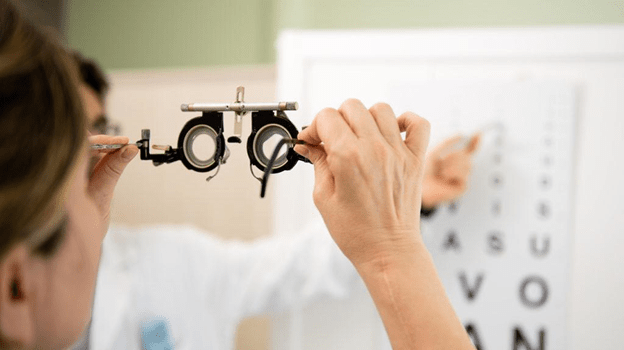
People often assume that short-sightedness is the ability to see close objects but not those that are far away, with long-sightedness being the exact opposite. The truth is that it’s not as straightforward as that, with both eye conditions carrying varying traits that trouble the individual.

Luckily, laser eye surgery in St Kilda, Malvern and throughout Melbourne can help both conditions.

Let’s take a look at short and long-sightedness, and how both conditions can be treated.

The workings of the eye

There are multiple anatomical elements that create an individual’s vision. This is just the beginning of vision, and doesn’t go into the important interpretation and processing aspects of the brain once the eye sees something.

To produce clear, sharp vision, light has to pass through:

  • The tear film that is located at the interface between the air and the eyeball’s surface.
  • The cornea, which is the transparent tissue dome found at the front of the eye.
  • The fluid located between the cornea and the crystalline lens that is located behind the iris – otherwise known as the coloured part of the eye.
  • The crystalline lens, which is located behind the iris with fibres called zonular fibres. These fibres are attached to the circular ciliary muscle. This lens has the ability to change shape and, consequently, change the focus of light. Relaxing and tensing the ciliary muscles is called accommodation.
  • The gel between the retina and the lens at the back of the eye, otherwise known as the vitreous humour.

Once light rays pass through all these optically transparent components, they then have to focus to a point located right on the retina. This way we can perceive our sight as sharp, clear and efficient.

With a strong, efficient eye, the degree of bending (refraction) of light through all the eye’s components matches the eyeball’s physical length. When the eye is completely relaxed and looking forward into the distance, light has the ability to focus naturally to a sharp point located on the retina.

Refractive errors, like that of short and long-sightedness, arise when these elements don’t align.

So, what is the difference between short & long-sightedness?

Short-sightedness (myopia), occurs when the eyeball’s length is too long for the eye’s refractive power. Individuals with short-sightedness will generally find that their near vision, such as reading books and screens, is clear with no glasses or contact lenses. However, they may struggle with reading and seeing over long distances, causing them to require optical correction. The problem can worsen with age, depending on the intensity of the myopia.

Individuals with a low intensity short-sightedness will find they may still require glasses when they get older. This happens if a person’s typical age-related near vision decline exceeds their ability to see objects up close. Patients with more moderate intensity short-sightedness find that they can retain easy reading vision by taking off their long-distance glasses.

Long-sightedness (hyperopia), is slightly different, but can also be called the opposite of myopia. Long-sightedness arises when the eyeball’s length is too short for the eye’s power. Individuals can only control one of the refractive components mentioned above, and this is the power of the lens throughout the process of accommodation. Accommodation is quite active when we are young as the lens is flexible.

Treating both short & long-sightedness

Laser eye surgery can potentially correct both short and long-sightedness. The procedure involves a laser being used to reshape the surface of the eye, and it can also be a treatment for age-related vision decline. It is a good idea to contact your ophthalmologist to discuss whether it might be the right treatment for your short or long-sightedness.