Category

Business

Category

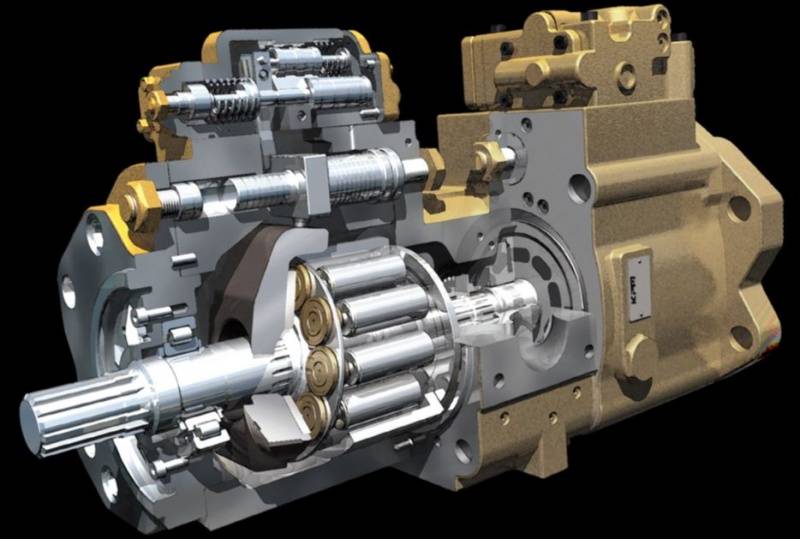
For beginners in the hydraulic systems industry, confusion on whether they should use a variable or a fixed displacement pump is common. Selecting the right pump will have a huge effect on your hydraulic system’s performance, operating cost, and operational efficiency. In this post, we discuss the difference between variable and fixed displacement hydraulic pumps.

Purpose of a pump in a hydraulic system

A hydraulic system pressurized fluid to produce the energy that drives the machinery. The hydraulic pump works by drawing the fluid from the reservoir and channeling it down the hydraulic system. Both variable and fixed displacement pumps are positive displacement pumps. Displacement refers to the fluid volume that is moved by the pump for each complete cycle.

Variable displacement pumps

The outlet pressure and flow rate in this kind of pump can be altered while the pump is running.  The amount of fluid displaced can be altered by adjusting the speed of operation, repositioning the displacement control, or both
In a displacement pump, the amount of flow depends on the number of rotating pistons. By controlling the pistons’ stroke, you adjust the pump’s displacement. In a variable displacement pump, this is achieved by adjusting the angle of the rotating pistons by tilting the system’s swashplate. Variable displacement pumps are used in vehicles as axial piston pumps.  Variable displacement pumps are common in mining, oil and gas, and construction industries. These pumps do not require to be operated manually. Rather, the valves which control the actuators’ speed control the rate of fluid flow. However, they are complex and costlier compared to a fixed displacement pump.

Fixed displacement pumps

In a fixed displacement pump, the amount of displaced fluid can only be changed by adjusting the operational speeds. Fixed displacement pumps are used in open center systems. They are ideal for a wide range of applications where the amount of energy or pressure is constant.
These pumps are simple to operate, easy to maintain, and relatively cheap. The gear pump, screw pump, and the bent axis piston pump are the most common types of fixed displacement pumps. As industrial hydraulic systems normally run on electric motors, applications of fixed displacement pumps in industrial applications are quite limited.
When selecting a pump for your hydraulic system, you will need to answer such questions as:

  •  What application are you using it for?
  • What amount of energy or force will be required to run the system efficiently?
  • What are the operational requirements?
  • What type of actuators will you use?

Answering such questions will help you establish whether your system requires a variable or a fixed displacement pump. Our experts will also guide you on what’s suitable for your system’s requirements. Contact us at +44 (0) 1475 742500.
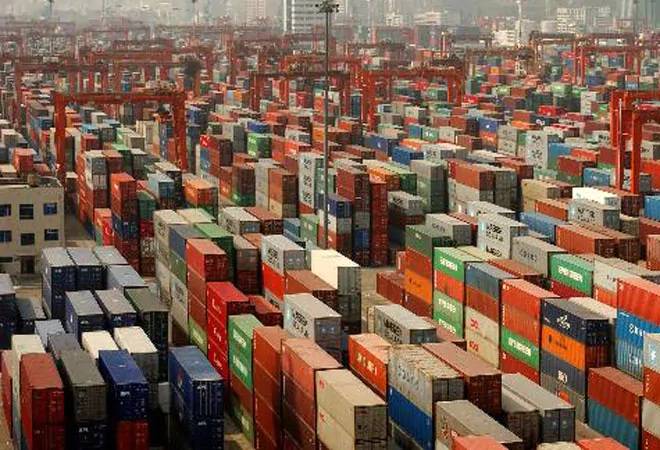

Every industry has its own terms, codes and abbreviations to work with. Ocean freight container shipping is no exception to this too. In order to get well acquainted with this subject, you need to understand the basic terms used on a daily basis. Here is a list of terms listed byClearit.ca to begin with.

  1. Port/Port

This term is read as Port to Port. In other words, the ocean carrier is contracted to transport the container beginning from the port of loading to the port of discharge. The costs like transportation costs, terminal charges etc. are not included in the contracted price.

  1. LCL

LCL stands for Less than container load. There will be many instances where the shipper won’t need a full container. So, the shipper has to book a part of the container or go LCL. Here, the shipper is charged for only the part he is booking the freight is using. Mostly, the cost of shipping LCL is less than going for a full box. But, there are other shippers present in the containers as well, so this will definitely take a lot of time, as the multiple shippers need to be coordinated in order to fill the complete container.

  1. FCL

FCL stands for Full Container Load. Shippers who deal with FCL need to pay term for the full container flow from point to point. An FCL container contains one shipper for one container.

  1. CY/CY

CY/CY stands for Container yard to container yard. This takes place when ocean carrier is contracted in order to ship the container from the origin to their destination. The costs involved in transport of these containers are not inclusive in the contracted price.

  1. Liner terms

These terms are most preferably used when carriers contract the space between each other. When a shipper contracts his liner terms, the carrier is not responsible for any kind of terminal handling charges. The contract terms encompass all the port charges at the origin as well as the destination.

  1. Free in/ free out

Mediterranean mostly uses the shipping terms. Shippers using Free in/free out terms are accountable for all kinds of terminal charges at the origin and the destination. The ocean carrier is just contracted for shipping the container at one point to another. In free in/free out terms, the shipper must pay all the terminal charges which is very unlike port/port terms.

Data privacy has always been a priority for everyone. However, as data becomes digitized and more information can be shared online, data privacy is becoming more important. Companies may possess personal information of their customers that must be secured to protect their customers’ identity. Exposing customers’ identity will tarnish the reputation of a company. This makes it important for companies to have stronger control over consumer data.

Importance of Data Protection and Security

Protecting business and consumer data is paramount to the success of a company. Adopting privacy and security practices will give businesses more control over their data. Here’s why this is important for any company:

  • Meet compliance requirements. Companies that fail to implement privacy protection will face hefty fines and penalties. Also, they risk losing valuable business relationships if they fail to comply with their contractual requirements for privacy protection.
  • Prevent data breaches. Organizations must implement strong security safeguards to protect personal data to reduce the number of security incidents which lead to privacy breaches. Even fewer breaches can mean that a business can lose trust which can result in them losing customers and even partners. When data ends up in the wrong hands, this can hurt businesses as they have to deal with fines, penalties, and civil suits.

  • Maintain and improve brand image. A privacy breach can damage brand value and reputation. Organizations must make consumer data protection a priority by following privacy practices. This will build connections to their brand, improving brand reputation and value.

How to Protect Consumer Data

A lot of businesses overestimate their ability to handle data loss after a breach takes place. Many of them think they are well-prepared to put off phishing efforts without realizing that most data breaches don’t happen this way. Systems such as unsecured portals, endpoints, websites, smart devices, and networks are vulnerable to possible invasion. That is why companies must review their safety mechanisms for secure data processing and handling in their IT environment.

One of the ways to protect consumer data is to stay current on encryption practices. Also, it is important to limit access to customer information. The fewer the people with a need for access, the fewer the chances for hackers to attack at a weak point. Also, data must be destroyed after using it. There are professionals who can completely destroy data without leaving any trace. This service is usually available as part of electronic waste recycling packages. But, complete data wiping and deletion can also be done by the in-house professionals if companies have them.

Product quality will matter less if the product itself is not delivered on time. Poor delivery can result in customer and money losses. This is especially for businesses that operate online. With the seeding of online reviews and rating websites, the voices of customers monitoring work from home productivity are easily heard by other customers. When customers turn their back on a business, that trust will to their rival. But, aside from fast service, there is an increasing need for organizations to offer personalized and seamless service delivery. Keep reading to know why:

Increase Competitive Advantage

A quick service delivery helps businesses stand out in their industry. This is because most businesses take a while to respond to the inquiries of their customers. These days, customers tend not to have the patience to wait for services to arrive. Rather, they easily decide to turn to another company hoping to get what they need.

Increase the Number of Repeat Customers

Customers come back to a business that gives them the best experience. Thus, offering them fast, seamless, and personalized service delivery attracts them back to one’s business. This impresses customers and ensures they don’t look elsewhere. Plus, happy customers are willing to refer the business to others, driving more sales to the business.

Seamless Customer Experience

A consistent customer service delivery speed can improve customer satisfaction. With this approach, businesses can collect customers’ feedback and solve their problems quickly. By delivering personalized data, customers will have their individual needs met. For businesses, this means using strategies such as intelligent routing and advanced CRM.  Intelligent routing lets customers connect to agents who have the correct expertise, offering specialized service to high net worth customers.

Maintain a Better Balance Between Automation and Live Agents

Automated customer service is vital to the success of any customer service strategy. Some customers do not want to explain their specific circumstances to a live agent. Others have simple needs that an automated service like a FAQ page or live chat can handle. Meanwhile, a complaint or inquiry can require a customer to speak with a live agent. When this occurs, the transition must be fast and seamless. Also, personalized service comes into play by tracking the preferences and habits of customers as well as matching them to every interaction.

Empower Continuous Improvement

By taking steps to provide personalized customer service, a business lays the foundation for continuous improvement for their bigger customer experience efforts. As their agents learn to communicate more effectively, they will get more conversions and the opportunity to achieve sustainable growth.

No matter which stages your business is in, it needs capital to survive. It may need capital to launch, grow, or just to operate. Your capital can be in the form of personal savings, bank loans, retirement accounts, credit cards, or funds from your family and friends. However, not all businesses are launched with this kind of outside investment. For many businesses, getting funding sources from banks, investors, and lines of credits is not possible. Fortunately, new funding options are now available to respond to the needs of businesses and individuals. Below are of the funding options available for them:

Peer-to-Peer (P2P) Lending

This new funding model is getting more and more popular among businesses owners. In this model, financing is funded by investors instead of a direct lender. Peer-to-peer lenders underwrite borrowers; however, do not fun the loans directly.

Crowdfunding

This has become a viable function option for business people who are starting a new business. Crowdfunding works by giving an idea that people would want to support with small-dollar contributions. Business owners that get plenty of people to buy in will raise lots of money. This function option requires the right type of product or exciting project for a campaign to be launched through a crowdfunding platform.

MicroFinance

Microfinance offers capital to start a business. It is a loan given to borrowers without collateral. But, interest rates for this funding option are usually very high.

Revenue-Based Financing

Some firms are now offering expansion capital through flexible business loans paid back based on a part of monthly revenue. This kind of funding suits existing firms, mainly those that have recurring monthly revenue.

Government-Funded Capital

Cities and states are increasingly providing startup or growth funding to attract new business or retain companies that wish to expand. A government agency offers zero or low-interest loans, venture capital, or business grants.

Venture Finance

A number of venture capital firms are upending conventional financing models by offering venture financing. Venture capital is offered by firms for funding small, emerging firms that have high growth potential. Usually, venture capital investments are for the long term. Venture capital firms expect returns on their investment of at least 25%, given the risk profile of the companies they invest in. Investors get capital by pooling money from insurance companies, pension funds, and wealthy investors. They decide which businesses to invest in and get management fees and a percentage of the profits.