Category

Tech

Category

In the world of computers and online safety, the FortiGate 40F by Fortinet is a favorite for many businesses. But why? This easy-to-understand article will examine why the FortiGate 40F could be the perfect choice to keep your network safe.

What Is Fortigate 40F?

The FortiGate40F is a particular type of wall called a firewall. It’s part of Fortinet’s next-generation firewall (NGFW) series. Its job is to keep your network and data safe from online threats. Think of it as a security guard for your network, keeping an eye on the information coming in and out and blocking anything that looks risky.

Why Choose Fortigate 40F?

Here are a few reasons why FortiGate 40F is a good choice for keeping your network safe:

  • Fast Performance: The FortiGate 40F is built for speed. It uses a special chip, the SOC4 security processor, to handle lots of information quickly and safely. This keeps your network fast and secure.
  • Secure SD-WAN: SD-WAN is a neat technology that connects different parts of a business network over the Internet. FortiGate 40F has built-in secure SD-WAN, helping you connect your network safely and efficiently.
  • Easy To Use: People like things that are easy to use. That’s why the FortiGate 40F is made to be user-friendly. It has a simple interface that makes managing your network safety easy.
  • Adaptable Security: The FortiGate 40F can be adjusted to your needs. It offers different security levels, so you can choose the protection level that fits your business best.

How Does The Fortigate 40F Work?

The FortiGate 40F works by keeping an eye on your network traffic. When information tries to enter or leave your network, the FortiGate 40F checks it first. If it sees anything unusual, like a virus or a hacker, it blocks it to keep your network safe.

Advanced Features Of Fortigate 40F

Apart from the basic jobs, FortiGate 40F has some extra features that make it stand out. It has AI-driven FortiGuard Labs and threat intelligence, which constantly updates to protect against new threats. Plus, it’s part of the Fortinet Security Fabric, which means it can work with other Fortinet products to give you complete security coverage.

Whether keeping a small business network safe or connecting remote workers, the FortiGate 40F is a reliable, easy-to-use option. It’s an intelligent choice for robust network security, protecting your business in the long run.

Conclusion

The FortiGate 40F is a simple, efficient choice when keeping your network safe. Its fast performance, secure SD-WAN, easy-to-use design, and adaptable security levels make it a great business choice. It’s a simple answer to the tricky problem of online safety, helping to keep your network secure.

Night light photography, also known as low-light photography, is a style of photography that primarily takes place in the absence of strong, direct light. This technique often involves capturing images during twilight hours, or after sunset when artificial lights illuminate the scene.

Importance Of Night Light Photography

Night light photography offers photographers the opportunity to capture unique and dramatic photos. The play of light and darkness provides a sense of mystery and depth, adding an artistic touch to your images that can’t be achieved during daylight hours.

Essential Equipment For Night Light Photography

· Camera Settings And Accessories

In night light photography, your camera settings are critical. Manual mode allows you the most control. You’ll want a camera with good low-light performance, often marked by a high ISO range. Lenses with wide apertures (like f/1.4 or f/2.8) also help in capturing more light.

· Importance Of Tripods And Stabilizers

Stability is key in night photography, as most shots require long exposures. A sturdy tripod and camera stabilizer can help prevent camera shake, ensuring sharp, clear photos.

Techniques For Capturing Stunning Night Light Photos

· Understanding Natural Light Sources

Here are the best techniques if you are wondering how to shoot night light photo(วิธี ถ่าย ไฟ กลางคืน, which is the term in Thai)

In night light photography, natural light sources like the moon, stars, or distant city lights can be your best friend. Understanding how to use these light sources will enhance your photography skills.

· Utilizing Artificial Light Sources

Artificial light sources, such as street lamps or building lights, can add character and depth to your night photos. Using these sources creatively can result in captivating images.

· Long Exposure Photography

Long exposure photography involves keeping your camera’s shutter open for extended periods. This technique allows you to capture more light and can create beautiful effects, like star trails or light streaks from moving vehicles.

· High Iso Photography

High ISO settings can help capture more light, but they can also introduce noise to your photos. Balancing these aspects is crucial for quality night light photography.

Post-Processing Night Light Photos

· Importance Of Editing Software

Editing software like Adobe Lightroom or Photoshop can help enhance your night photos, correcting for noise, improving sharpness, and adjusting light levels.

· Basic Editing Techniques

Some basic editing techniques include adjusting brightness and contrast, reducing noise, and enhancing sharpness.

Conclusion

Remember, photography is an art, and like all arts, it requires patience and practice. So, get out there and start exploring the beauty of the night through your lens!

Converting those photos to a more common format with the release of iOS 11, Apple switched to HEIF technology from the long JPEG standard. This means that all photos copied to your PC will arrive with a HEIC extension.

This could be problematic depending on what you want to do with those photos.

For example, if you want to order prints online or create a slideshow, you’ll find that the HEIC format isn’t accepted. In fact, viewing such photos in Windows is impossible without an additional plug in. Fortunately, a free HEIC codec is available in the Windows App Store

Image quality of HEIC and JPG files:

In terms of image quality, there is no real difference between HEIC and JPEG files. This makes them ideal for sharing photos online or emailing them as they take up less disk space and download faster. 

HEIC Files vs. JPG Space:

HEIC files are about 50% the size of JPG files and therefore take up less disk space. However, not all devices or apps can read HEIC files yet, so you may need to convert them to JPG if you want to share them with someone who doesn’t have a device or app that supports HEIC files.

HEIC files vs. JPG Supported OS: HEIC is a newer, more efficient image format supported by newer Apple devices and some Android devices. 

JPG is an older and less efficient image format supported by most devices. For example, Windows 10 does not currently support them. If you want to share photos with people using Windows 10 or earlier versions of Windows, you must first Convert HEIC to JPEG.

HEIC vs JPG files Image quality

 Transparency of JPG files: Another benefit of HEIC files is that they are transparent, which means you can see the background behind the image. JPG files are opaque, so you cannot see the background behind the photo. It does not remove any data from the images, so there are no artifacts in them. 

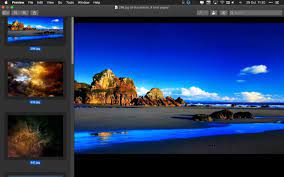
Using image Preview App on Mac to Convert HEIC to JPG

Using Preview:

Looking for ways to convert multiple HEIC files to JPG on Mac? If you are a Mac computer user, you can change HEIC to JPG by following these instructions.

  1. Select your image and then right-click. Open with preview.

2Open all images by clicking Edit> Select All and opening the File tab from the menu.

Then export all the selected images and choose the output location.

3Choose JPEG format to convert, adjust the quality, and click the “Choose” button to convert the HEIC file to JPG convert.

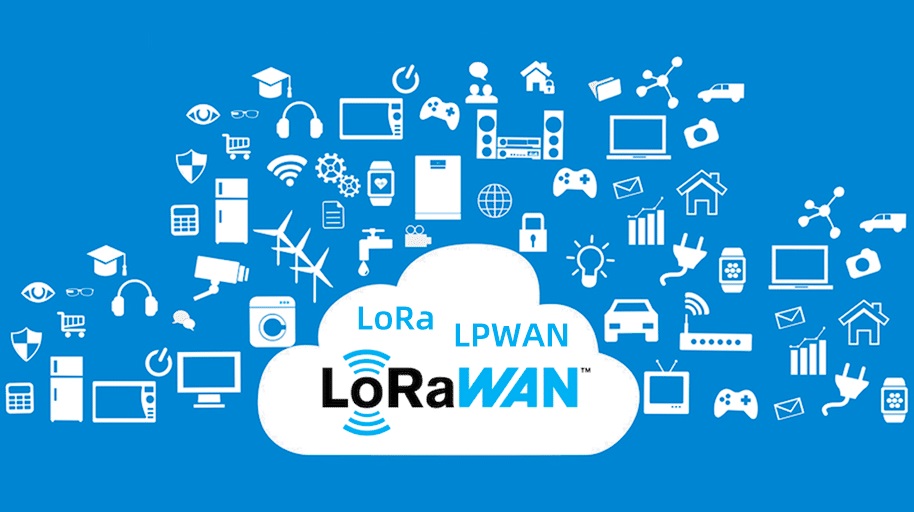
As IoT continues to alter how we connect and interact with our gadgets, there are various network options for smart solutions to be built on. LoRaWAN and narrow band IoT are the dominant low power wide area networks (LPWANs) (NB-IoT).

Semtech’s LoRa technology is now the de facto wireless platform of IoT, enabling various solutions in various industries through a compelling combination of long-range and low power. NB-IoT, designed for long-distance communication between devices and the Cloud via cellular infrastructure, is compatible with LTE mobile networks. LoRaWAN uses unlicensed radio spectrum bands in the sub-gigahertz range to enable LPWAN communication between end nodes and Lora gateways connected to a network and application servers in the Cloud. The LoRaWAN standard, ratified as an International Telecommunications Union (ITU) standard, is built on LoRa technology.

Ecosystem

  • LoRaWAN is sponsored by the LoRa Alliance, an open, non-profit organization recognized by the International Telecommunications Union’s Telecommunication Standardization Sector (ITU-T). Its members worldwide work together to promote and accelerate the success of the LoRaWAN standard, which the ITU-T recognizes as an open worldwide standard for secure, carrier-grade IoT LPWAN connectivity.
  • The 3rd Generation Partnership Project (3GPP) and the GSMA, two telecommunications standards organizations with the common purpose of furthering the interests of cellular networks and devices, embrace NB-IoT. NB-IoT has primarily been deployed in China but is beginning to spread to other places.

Spectrum

  • LoRaWAN is designed for low-power, long-range applications. LoRaWAN networks run in the unlicensed Industrial, Scientific, and Medical (ISM) sub-GHz spectrum, available to network operators and device manufacturers.
  • NB-IoT operates in frequency licensed for cellular (LTE) networks and prioritizes spectrum efficiency over all other considerations. Cellular operators pay relatively high license costs to use these frequency bands, restricting the number of licensees who can afford to pay to run NB-IoT services.

Deployment Status

  • As of March 2022, 166 network operators provide LoRaWAN connectivity, with LoRaWAN private and public network deployments in 181 countries, over 240 million end nodes, and 3.2 million Lora gateways in operation.
  • According to the GSMA, the group representing the interests of NB-IoT, LTE, and other mobile networks, 62 nations have rolled out NB-IoT as of February 2022.

Deployment Options

  • LoRaWAN networks provide extremely flexible deployment choices. It implies they can be put indoors or outdoors, in public, private, open communities, or hybrid networks. LoRaWAN has excellent signal propagation capabilities, enabling use cases in urban settings that demand deep in-building or underground connectivity and rural, open situations where networks can extend up to 30 miles per gateway.
  • NB-IoT makes use of LTE cellular infrastructure. It signifies that the networks are public outdoor networks with 4G/LTE cellular towers. Expanding the LTE network for IoT use cases is prohibitively expensive. Even if sensors are out of range of the base station, base stations cannot be easily identified elsewhere.

Protocol

  • LoRaWAN has been designed from the ground up to consume very little energy. It increases the battery life of sensor devices in the field by up to ten years, lowering battery replacement expenses. The LoRaWAN standard permits data to be provided asynchronously, meaning that data is only sent when required.
  • High-precision electronics, large device stacks, multi-band spectrum architecture, and end-to-end synchronized protocols contribute to rising energy usage. The wastes significant battery life in sensor devices, resulting in high battery replacement costs, which can be prohibitively expensive in many applications. NB-IoT maintains a synchronous connection to the cellular network even when no data is sent.

Transmit Current

  • The transmit current of LoRaWAN is 18mA at 10dBm and 84mA at 20dBm. Because of modulation differences, LoRaWAN can be powered by low-cost batteries such as coin cells.
  • NB-IoT sensors consume about 220mA at 23dBm and 100mA at 13dBm, implying that they demand more power and require more frequent battery changes or larger batteries.

Receive Current

  • LoRaWAN reduces sensor bill of materials (BOM) costs and increases battery life for remote sensors. LoRaWAN runs at 3-5 times lower total power with a received current of about 5mA.
  • The received current of NB-IoT is roughly 40mA. On average, communication between the cellular network and the device consumes more than 110mA and lasts tens of seconds. Protocol overhead considerably impacts battery life for devices requiring 3, 5, or 10 years of operation.

Data Rates

The LoRaWAN standard dynamically changes data rate based on sensor distance from a gateway, maximizing time-on-air (saving power budget) and reducing collisions. LoRaWAN has a data rate ranging from 293 to 50kbps

Link Budget

  • LoRaWAN’s maximum coupling loss (MCL) signal varies depending on area regulatory constraints. In the best scenario, the link budget is between 155dB and 170dB.
  • NB-IoT requires substantial repetition at a low bit rate (increasing power budget) to enable remote sensors. The best-case link budget is 164dB.

Mobility & Satellite

Mobility: Mobile sensors can be supported by LoRaWAN and tracked as assets move from one area to another. It may be done without GPS and with sufficient accuracy for many purposes. NB-IoT is restricted to idle mode cell reselection, inefficient for mobile asset tracking using Lora Gateway.

Satellite: LoRaWAN (which supports LR-FHSS data rates) is ideal for direct device-to-satellite communications, limiting downlink communications to avoid interference with terrestrial devices, optimizing battery lifetime, and achieving a high link budget under difficult radio conditions. For device-to-satellite connections, NB-IoT frequent downlink communications and significant energy consumption owing to message repeats under adverse radio circumstances.

Lastly,

LoRa is a wireless modulation method based on Chirp Spread Spectrum (CSS). It uses chirp pulses to encode information on radio waves, similar to how dolphins and bats communicate! LoRa-modulated transmission is resistant to interference and can be received over long distances.

The possibilities for connecting our planet are endless. It comes down to awareness, cost, and complexity. Akenza thinks we can accelerate IoT adoption in the market by considerably reducing the work and complexity organizations encounter while designing IoT solutions.

The Internet of Things (IoT) is a network of physical items that connects to and communicates with other physical objects and services across a network, whether the Internet or another network. Globally, there are currently over 10 billion networked devices, which is constantly increasing. Anything implanted with the necessary sensors and software can be connected to the Internet.

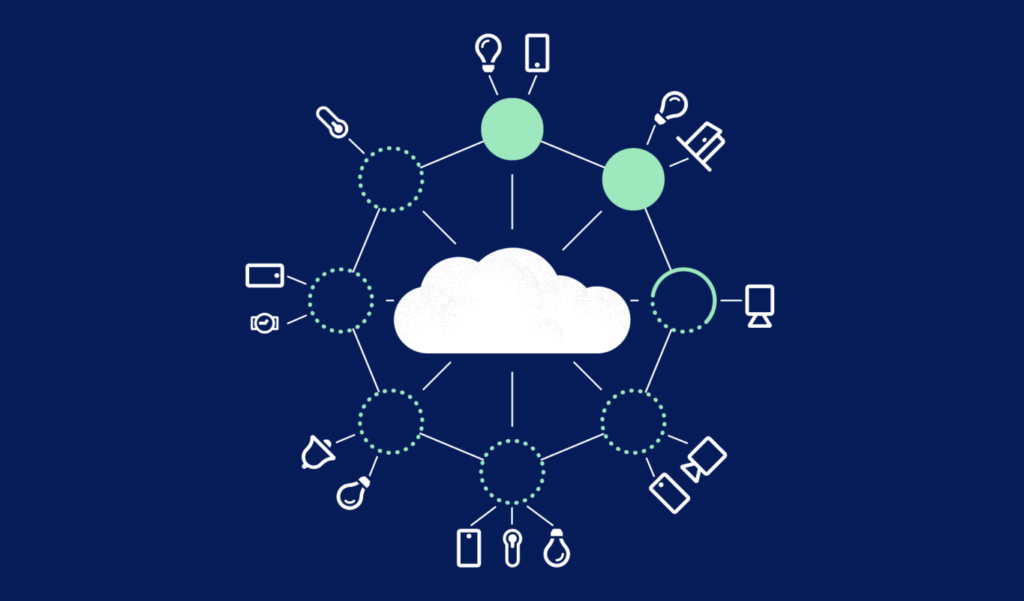
The managed Azure IoT Hub service, which is hosted in the cloud and acts as a central message hub, is used by connected devices and IoT applications. An IoT hub could be connected to just about any device. A secure and dependable connection between millions of devices and their backend software can be made.

The Internet of Things Azure Messaging Protocol (IoT) is an OASIS standard. By operating as a remarkably lightweight publish/subscribe messaging transport, MQTT is designed to connect remote devices with a small code footprint and low network traffic. Many industries use MQTT today, including the automobile, manufacturing, telecommunications, oil & gas, and e-commerce. You can use MQTT for the Internet of Things since it allows for a publish and subscribe method to easily link several devices or sensors. A crucial and beneficial IoT protocol is MQTT. A machine can link up with an Azure IoT hub using the following methods.

Why do you need Azure IoT Hub?

Millions of IoT devices and a backend located in the cloud can communicate reliably and securely thanks to Azure IoT Hubs. IoT Hub keeps track of events, including developing new devices, device failures, and device connections. IoT Hub helps a type of letter patterns, including device-to-cloud telemetry, device-to-device file upload, and request-reply techniques for cloud device control.

Without writing any code, you can design message routes to other Azure services and understand the state of your devices by using device-to-cloud telemetry data. Send commands and notifications to your connected devices with the help of cloud-to-device messaging, and trace message delivery using acknowledgment receipts. Resend device communications automatically as necessary to account for sporadic connectivity.

Customers may publish, distribute, and manage over-the-air updates for everything from tiny sensors to gateway-level devices using the comprehensive platform known as Device Update for IoT Hub. Learn about the advantages of using Device Update for IoT Hub, such as quickly responding to security issues and delivering functionality to achieve business goals without having to pay additional development and maintenance expenses associated with creating your update platforms.

Using IoT Hub to manage devices

The wants and needs of IoT operators range greatly depending on the sector, including transportation, industry, agriculture, and utilities. The kinds of equipment that IoT operators use also vary greatly. IoT Hub is designed to give developers the tools, patterns, and code libraries they need to create management solutions that can handle various device types. IoT Hub has several features that can be used to manage connected devices. This implies that

  • You can save, sync, and query device metadata and status information for all of your devices.
  • Depending on the shared properties of the devices, device states can be configured individually or collectively.
  • Message routing integration enables an automated response to a device’s status change.

Security

Businesses must deal with IoT-specific security, privacy, and regulatory issues. IoT security calls for secure device provisioning, secure connectivity between the devices and the cloud, secure data protection during processing and storage in the cloud, and other requirements. Data can be exchanged across specific communication channels thanks to IoT Hub. Each device may be managed securely and connects securely to the hub. Widgets are automatically supplied to the correct seat when they boot up, and access may be controlled per device.

Relying on the abilities of the machine, there are also a variety of various authentication methods, such as SAS SAS token-based authentication, individual X.509 certificate authentication for secure, standards-based authentication, and X.509 CA authentication.

High Availability and Recovery from Disaster

Businesses all have different uptime objectives. Three primary High Availability (HA) and Disaster Recovery (DR) functionalities offered by Azure IoT Hub include:

  • HA within an area

The IoT Hub service implements redundancy in nearly all of the service’s levels to offer intra-region HA. These redundancies are used to achieve the SLA given by the IoT Hub service and are readily available to developers. Transient shortcomings, however, should be anticipated when employing cloud computing. To deal with these transitory failures, suitable retry policies must be integrated into components that connect with the cloud.

  • DR across regions

Situations could occur when a data center has prolonged outages or physical breakdowns. Although unlikely, it is feasible that some of these circumstances cannot be helped by intra-region HA capacity. IoT Hub offers several potential solutions to recover from lengthy outages or physical failures. Customers can choose between a manual failover or a failover that Microsoft initiates in these circumstances.

Conclusion

A network of physical devices that connects to and communicates with other physical objects and services is called Internet of Things (IoT). Currently, more than 10 billion networked devices are in use, and this number is steadily rising. Much High Availability (HA) and Disaster Recovery (DR) functions are available with Microsoft’s newest cloud computing platform, Azure IoT Hub. The cloud-hosted controlled Azure IoT Hub service provides a central message hub.

You can also create valuable Azure IoT Hub products and services using the self-service IoT platform akenza.io. It connects, manages, and keeps track of Internet of Things devices in a single location. Akenza.io is sure that it will significantly lessen the workload and complexity that businesses must handle when integrating IoT solutions.