Archive

September 14, 2020

Browsing

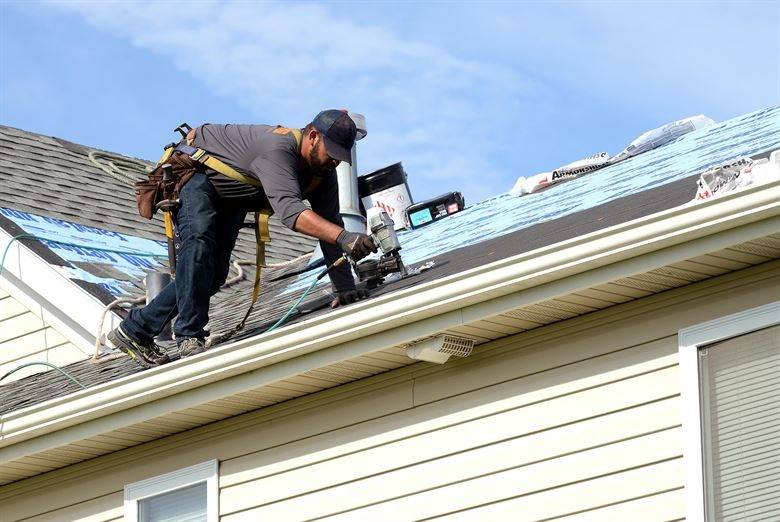
Roof replacement is a massive project and needs careful handling of the material as well as professional training. You need to be sure of you’re getting the best when it comes to replacing your roof. If you are thinking of installing or replacing the roof yourself, then keep in mind that the installation has to be done right, and mistakes can cost you a lot and can result in more expensive repairs down the line.

Whether you need to hire experts for replacing your roof, or should do it yourself is hard to decide. Both of these have pros and cons, so let’s quickly overview them to make the final decision. 

Do It Yourself

Do you enjoy DIY projects? No doubt, there is a certain satisfaction that comes from doing some of the repairs and fixing your home yourself. Apart from this, DIY projects can also be cost-saving. However, you should think twice before taking on a roofing project. 

DIY Roof Replacement Advantages

If the repair is relatively simple like replacing a shingle or two or applying some sealant on the leaking roof, then fixing it yourself might not be too bad. If your home was recently constructed or the roof has been replaced, then you might already have some leftover shingles, and this can save the product cost. 

DIY Roof Replacement Disadvantages

Walking around on the roof isn’t simple and safe, no matter what task you are doing. Roofers spend most of the time of their day on the roof, and thus they know how to navigate the dangers safely. They also have a high level of experience with almost every type of issue. 

In addition to this, if you are not sure exactly what is the issue and what you should do, then you might be risking your life. Also, what might be a repair to a small leak can turn into a structural issue if it is done improperly.  

Hiring a Professional Roofer

Roofing can be a dangerous task, and regardless of the structure of the roof, you can easily slip as most of the roofs don’t have a railing. So, when something goes wrong, it’s hard to know if you should buckle up and do it yourself or hire a professional. Here are some of the pros and cons of hiring a professional roofer:

Professional Roof Replacement Advantages 

You don’t have step onto the roof yourself, and that saves you a lot, starting with peace of mind that your safety isn’t compromised. Also, when a professional roofer is hired, you are pretty sure that the job will be done right by professionals who are highly experienced. An experienced roofer will also be able to tell if there is any other issues with the roof that needs to be fixed or not. You will be told exactly how the roof will be fixed along with an estimate of the cost. You will be sure that the problem is taken care of permanently and properly unless the other issue arises. 

Hiring a professional roofer can also mean that the manufacturers will be giving the warranty of the material if installed by a certified professional. Thus, you will be saved from a lot of headaches in the future. 

Most importantly, if insurance is involved, then chances are your insurance company will require that the job be done by a company that is licensed and experienced in performing the job correctly, and there are warranties in place that will cover any issues with the materials or labor.

Professional Roof Replacement Disadvantages

Aside from the added cost of hiring a professional roofing company, some roofers are booked in advance for weeks and months depending upon the time of the year, and may not be able to replace your roof immediately. There is also the consideration that if they are heavily booked with jobs that are on a larger scale, they might not want to perform a job that is simply a case of replacing a few shingles. 

In a nutshell, whether you should do it yourself or hire a professional roofer depends upon the issue and other relevant factors. Both of these have their pros and cons; still, the majority of the homeowners prefer to hire a professional to make sure the job is done correctly and safely.


Maruti Suzuki is very popular in the second-hand car market, thanks to its incredibly low running costs and high reliability. Buying a used car is often like shooting in the dark unless you are sure about the condition of the vehicle you choose to buy. When it comes to purchasing a used car, most buyers find themselves to be a little unclear as they are not always aware of how to buy a used car. 

If you are looking for a pre-owned sedan, Maruti Suzuki is a recommended brand to choose. In the second-hand car market, your options for a Maruti Suzuki sedan include models like Dzire, Ciaz, Baleno (older sedan), SX4, Esteem and, if you are lucky enough, a Kizashi. 

Then again, why should you go for a Maruti sedan when there are plenty of other options available? Well, here are some reasons why Maruti Suzuki cars are pretty much the best used cars to buy:

Reliability

The ever-increasing number of Maruti Suzuki owners is a testament to the fact that it’s a highly reliable brand. It boasts of the greatest number of real testers driving its cars as it is inevitably the most sold car brand every year. One cannot maintain such a sales record for decades with ordinary cars, isn’t it? When you are looking to buy used cars, you truly get to know the worth of the Maruti Suzuki brand. 

Mileage

A critical reason why Maruti should be your first choice is its highly fuel-efficient cars. Right from its entry-level cars such as Alto, Ciaz to its premium S-Cross SUV, all are known to consume less fuel per kilometer. When you have great fuel-efficiency along with reliability in a car, do you really need anything else? 

Maintenance

Often when listing down low maintenance cars, four out of five are Maruti Suzuki’s. They are easy on the pocket when at the service station too. It is one of the most important reasons why Maruti cars are the best second hand cars to go for. 

Massive dealer network

Maruti Suzuki’s dealer sales network has more than 3600 outlets across 1861 towns and cities. So, if at all your Maruti breaks down anywhere, you are more than likely to find an authorized service station nearby. Even if you don’t, every garage can repair a Maruti car. Another advantage of a good network like Maruti’s is the easy availability of spare parts in remote locations as well. 

The carmaker also has a good network of True Value stores. You can buy used Maruti Suzuki cars from these outlets that also assist you in getting a used car loan. Check your monthly instalments using used car loan EMI calculator to plan your budget wisely.

Brand resale value

Some people buy used cars to hone their driving skills before they upgrade to newer cars. Most of these cars are then resold in the market as a third-hand car. A car from a renowned brand such as Maruti Suzuki will fetch you more value than any other brand in the resell market for sure even if yours is already pre-owned. 

Take advantage wide range of used car loan at attractive interest rates and drive home your dream car.

The central idea behind introducing the Udyam Registration, previously called Udyog Aadharwas to simplify the tedious process that business owners had to go through to register or enlist their business as an MSME.

About Udyog Aadhar

Udyog Aadhar or Udyam Registration is an identification system, particularly for MSMEs. It is a Government registration system that offers a recognition certificate and unique number to certify micro, small and medium enterprises. By registering your business via MSME Udyog Aadhar or Udyam Registration, you can enjoy numerous benefits that the Government offers for MSMEs. 

Udyog Aadhar Registration Process

The process of Udyog Aadhar registration is entirely online and based on self-declaration. It is also free of cost. Before you register your enterprise under MSME Udyog Aadhar, check whether your business fits the eligibility criteria. Given below is how enterprises are classified.

Enterprise Maximum Investment in Plant and Machinery  Turnover Threshold
Micro-Enterprise Up to Rs.1 crore Up to Rs.5 crore
Small Enterprise Up to Rs.10 crore Up to Rs.50 crore
Medium Enterprise Up to Rs.50 crore Up to Rs. 250 crore


Easy Guide

Here is a simple guide for registering your business as an MSME. 

Step 1. Visit the official Udyam registration portal. 

Step 2. Select the “For new entrepreneurs who are not registered yet as MSME” option. 

Step 3. Enter your name as per your Aadhar card along with your Aadhar number. Then click on “Validate and Generate OTP.” You will get an OTP on your registered mobile number. Enter the OTP and click Validate. Doing this will validate your Aadhaar number.

Step 4. In the next step, select your organisation type, enter your PAN number, and click on validate. Doing this will validate your PAN.

Step 5. Next, you will need to provide your enterprise’s address, location, email address, mobile number, etc.

Step 6. You will also have to give your enterprise’s active bank account details. 

Step 7. The next set of information to be filled is the enterprise’s details. Mention your business’s main activity, i.e., ‘manufacturing’ or ‘services.’ Then submit the National Industrial Classification (NIC) Code for Activities and the number of people employed. After this, enter the amount of money you have invested in plant or machinery.

Step 8. After submitting all the particulars, select the District Industry center from a drop-down menu. After selecting, accept the declaration and click on “Submit and Get Final OTP”. Enter the OTP number and click the “Final Submit” button.

Step 9. After clicking on “Submit and Get Final OTP,” you will receive a registration number. Once the information is verified, you will receive an E-registration document in your email.

After registering your MSME with MSME Udyog Aadhar, you become eligible for benefits like getting a business loan at subsidised rates.

Whether it is for working capital or business expansion, MSME loans can offer you adequate finance quickly. To avail a loan, check your business loan eligibility and the documents required. 

Once you have checked your business loan eligibility, and have your paperwork in order, fill the application and get the funds in your bank account. 

With the vision to offer affordable housing to all, the Indian government has launched a variety of housing schemes. These schemes work towards providing easy home loan schemes so that the economically-weaker sections of the society can achieve their dreams of purchasing a home of their own. These affordable housing schemes allow potential homebuyers to avail a home loan through a housing loan scheme or purchase their own house at a price that is lower than what is offered in the market. 

Let’s get to know some government housing schemes. 

Pradhan Mantri Awas Yojana (PMAY)

One of the significant government home loan schemes that were launched to provide housing for all citizens is the Pradhan Mantri Awas Yojana (PMAY). The PMAY is a welfare scheme which aims to provide affordable housing to the society’s economically weaker sections. This was introduced to raise the standard of living of all social classes. Through the PMAY-U the Government intends to achieve its mission of “housing for all” in urban areas by 2022.

The PMAY scheme is a government home loan scheme extended through the Credit Linked Subsidy Scheme (CLSS) which offers its beneficiaries subsidy on home loan interest rates. This subsidised government home loan scheme allows the urban poor to avail of housing finance at cheaper ROIs. Based on the annual household income, you can qualify as a beneficiary under the- Economically Weaker Sections (EWS), Lower Income Groups (LIG), and Middle-Income Groups (MIG 1 or MIG 2). 

You can avail of PMAY subsidy benefit under the following guidelines.

Beneficiary Annual household income Maximum home loan  allowed for availing subsidy Interest rate  subsidy Maximum loan tenure (in years)
EWS Up to Rs.3 lakhs Rs.6 lakhs 6.5% p.a. 20
LIG Rs.3 to 6 lakhs Rs.6 lakhs 6.5% p.a. 20
MIG-1 Rs.6 to 12 lakhs Rs.9 lakhs 4% p.a. 20
MIG-2 Rs. 12 to 18 lakhs Rs.12 lakhs 3% p.a. 20


As a beneficiary, you can use this housing loan scheme to complete the purchasing of your home. This housing scheme makes female ownership or co-ownership mandatory under the EWS and LIG categories and an optional clause under MIG-1 and MIG-2 categories. Furthermore, the houses that are built under the PMAY use eco-friendly technology and materials to lower the environmental pollution. 

Along with PMAY, there are other housing schemes introduced to assist people in purchasing their own houses. Some of them are given below.

Delhi Development Authority Housing Scheme

The Delhi Development Authority (DDA) has been bringing out housing schemes to provide housing to all, especially the economically weaker sections at an incredibly reasonable rate. Along with the income-based categorization for the apartments, the DDA housing scheme also reserves apartments for war widows, specially-abled, SC/ST individuals and ex-servicemen.

The Maharashtra Housing and Area Development Authority Scheme

The MHADA provide affordable houses through a lottery scheme. The MHADA offers affordable housing options in different cities of Maharashtra for people who do not have homes of their own. In this scheme, the houses are allotted based on income.

When searching to apply for a home loan under govt housing loan scheme like PMAY, head to Tata Capital. Before applying for a loan, always use a home loan EMI calculator to calculate your home loan EMI