Archive

January 2020

Browsing

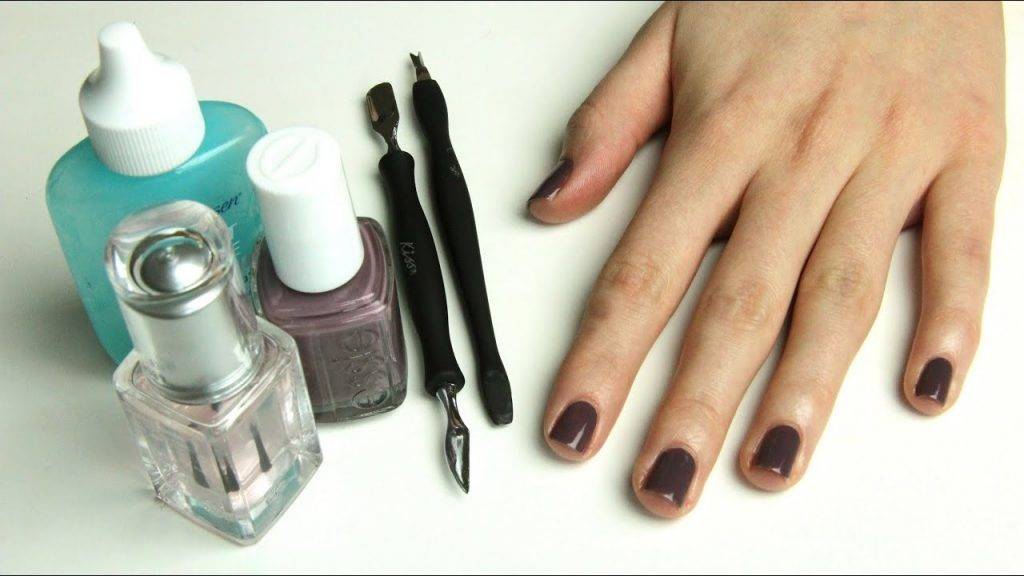
Sometimes you can’t make it into the salon. So, between your hair and manicure appointments, DIYing is the next best thing! Here are the 10 steps you need to take to DIY an at-home manicure.

  1. Gather your supplies. Cuticle remover cream. Hand lotion. Nail polish. Fingernail clippers. Nail file. Nail polish remover. Hand exfoliator. Towels. Bucket of water.
  2. Start by removing any nail polish you currently have on your nails with your nail polish remover. To do so, take a cotton ball or toilet paper and dip it into the fingernail polish remover. Then in a wiping motion, remove the polish.
  3. After you have a clean nail bed, it’s time to clip your fingernails. If you prefer not to use clippers, use a nail file. Make sure your nails are smooth so you don’t scratch yourself or those you may touch.
  4. Grab your bucket of water and soak your nails and hands. This will soften your skin so you can exfoliate and trim your cuticles. To have this experience be the most efficient and effective, use warm water and soak your hands for at least 5 minutes, more if possible.
  5. After your hands are soft and you’ve soaked them for a minimum of 5 minutes, it’s time to take care of your cuticles. Using the cuticle cream, place a small amount onto your cuticles and rub them into each one. Then push your cuticles back, so they are no longer covering your nail bed. If you know how to trim them and feel comfortable doing so, this is when this optional step would be best performed.
  6. Our favorite part comes next which is to exfoliate your hands. Using your hand exfoliator, rub the exfoliator between both your hands. Make sure you get the top and bottom of your hands as well as in between your fingers. Exfoliating the dead skin will help rejuvenate your hands’ smoothness and promote new skin growth. Rinse this off using your warm water and get ready for the next step.
  7. After you’ve exfoliated the dead skin from your hands, it’s time to use your hand lotion. Place a small amount of lotion on to your hands and rub it in. Using a hand towel, remove any lotion from your nails.
  8. Choose which nail polish color you want to use and be sure you have a top and base coat. Put one layer of base coat on your nails.
  9. Apply two layers of nail polish to your nails.
  10. Apply a top layer of topcoat and allow your nails to dry for at least 10 minutes before you do any activity that involves your hands.

You’ve officially given yourself a salon-worthy manicure at your house!

If you are on the market for a new rental property, you’ll usually find two types of homeowners. Those that are the direct landlord to the property and those who use a third-party vendor like property management companies. The difference between the two isn’t that far off but there may be one choice you prefer to use over the other.

A landlord.

A landlord is usually the person who owns the property you are renting. They don’t see the value or financial benefits of using an outside source, so they take on the responsibility. Their duties include fixing all maintenance issues, collecting rent, dealing with tenants, some handle yard work, snow removal, and finding tenants when the property is not occupied.

A property manager.

A property manager is a third-party company that is a vendor to a homeowner. The homeowner pays a property management company to handle all aspects of the property that a landlord does. The property management companies fee is in addition to the fees paid for any maintenance issues such as plumbing, electrical, or landscaping.

Landlord vs. Property Manager

As a renter, you may be wondering which is better to rent from. While no one can make that decision for you, we can discuss the pros of each.

Landlord Pros:

  • They are usually very responsive.
  • They care about the property.
  • It’s a person not a large corporation.
  • They normally form a personal relationship with their tenants.
  • In some instances, they are nearby.
  • Tenants normally have 24/7 access to them.

Property Manager Pros:

  • They are a company, so they handle everything professionally.
  • They will get a vendor to complete work usually the same day or next.
  • If you need work done that you need to pay for, they usually have deals worked out with different contractors so you can save some money.
  • They screen tenants with background checks.
  • They will have a larger pool of reputable sources to review before renting from them.

Herbal oil has been around for thousands of years as people of all ages and walks of life use it for a wide range of medicinal purposes. Following is an overview of what this type of is and how it can help to improve your life.

What is Herbal Oil?

Herbal oils are oils that been infused with one or more herbs for a set period of time. The essence of the herbs is transferred to the oil during the infusion period and the oils are commonly rubbed on the body or in one’s hair, making it possible to derive maximum benefits from herbs that are typically only eaten in small quantities.

Herbal oils should not be confused with essential as there are differences between the two products. Essential oils are extracted from plants by steam or hydro-distillation. They are more potent than herbal oils; this means they cannot be eaten and should always be diluted before use.

How Can Herbal Oil Improve Your Health and Appearance?

There are a number of ways in which herbal oils can improve your health. Basil oil, for instance, improves mental alertness and reduces anxious feelings. Cilantro, on the other hand, is the oil of choice for those who need a detoxifying internal cleanser. Herbal oils with marjoram are good for your heart while peppermint oils are good for your lungs. Indian ginseng has anti-inflammatory properties and can improve joint strength and stability.

Herbal oils are also great for your skin and hair. Thyme oil cleanses and purifies the skin. Saffron helps to heal blemishes, scars, and wrinkles, adding radiance to your skin and giving it a youthful, fresh appearance. Rosemary oil leaves your hair looking full and healthy while wild indigo reduces brittleness and splitting while protecting your hair from damage.

Some herbal oils are great natural cleansers. If you are tired of commercial disinfectants that leave the air and surfaces in your home full of chemical residue, you may want to consider mixing oregano oil with a homemade cleanser. Peppermint and thyme oils can be used in place of chemical-laden insect repellents.

Would you like to improve your appearance and overall health and well-being the natural way? Are you looking for a way to relax your body, mind, and spirit without taking medications that could have harmful side effects? If so, herbal oils can help you do just that. Choose your oils with care, apply them as directed and enjoy the many benefits that herbs can offer.

If you don’t have 20/20 vision, you are likely someone who wears contacts and eyeglasses. Eyeglasses have peaked in popularity over the past few years as more designer eyeglasses become available in various shapes, sizes, and styles. Some large fashion moguls can be seen with models walking the runway with glasses on. Something we normally do not see in fashion.

Getting your hands on a designer pair of glasses is easier than getting your hands on the latest new purse or skirt, as those often come with a hefty price. Glasses, on the other hand, are usually covered under your eye insurance policy so there are very few loopholes you need to go through to grab them up.

For women, there are many glass designers to choose from. Here are a few:

  • Versace
  • Burberry
  • Prada
  • Coach
  • Kate Spade
  • Ray Ban
  • Dolce and Gabbana
  • Tory Burch
  • Gucci
  • Michael Kors

As you can see, most of these designers are names that are popular in fashion so it’s easy to understand the value that comes with owning a pair of their eyeglasses.

Eyeglass Shapes

Like shoes, eyeglasses come in various shapes, styles, and colors. As you look at eyeglasses, you may realize they look amazing on the display, however when you try them on, they don’t look great at all. Why is that? In short, because some glasses are made for certain face shapes and skin tones while others are not.

Oval face – If you have an oval face, you have what is considered an ideal face shape. It’s proportionated all the way around. Look for glasses that are walnut-shaped.

Heart face – If your face is heart-shaped, look for glasses that are wider at the bottom than the top. Light-colored frames are best and even rimless.

Square face – Square faced individuals should look for glasses that are narrow ovals.

Diamond face – Frames with oval or cat-eye shapes are best.

The variety of life insurance products now available in the market often make the selection difficult for the buyers. Choosing between a ULIP or traditional policies like term plans and endowment plans puts many in a dilemma. Read this post to understand the significant differences between the two and select the best.

Now that you have decided to purchase life insurance, the next step is to select a policy. But search for it online, and you will come across different types of policies from several insurers. Many get confused between Unit-Linked Insurance Plans and traditional plans while purchasing life insurance.

While both are life insurance products, some factors differentiate them. It is essential to understand these differences to make the right decision. To help you pick the best, here are 5 of the most significant differences between ULIP and traditional policies-

  1. Type and Purpose

While both are types of life insurance policies, their purpose is different. A conventional plan like whole life policy, term policy, or an endowment policy only offers life coverage. However, unit-linked plans are investment cum insurance schemes. A part of the premium you pay for a unit-linked plan is invested in the fund of your choice and generates market-linked returns.

On maturity, while a traditional plan offers fixed returns, a unit-linked plan provides returns that are market-linked and not fixed.

  1. Plan Flexibility

As mentioned above, a part of the ULIP premium is invested in the fund of your choice. You get the opportunity to invest in options like equity and debt, and you can also divide the premium amount between investment and insurance.

You can select a fund based on your risk appetite, age, and financial goals, and even decide how much you want to invest. It is also possible to switch between funds during the policy period.

The features mentioned above make ULIPs highly flexible. However, traditional plans are not known to offer this flexibility.

  1. Lock-in Period

With unit-linked plans, you get a lock-in period of 5 years. On completion of the lock-in period, you can exit the plan. You will receive the positive or negative returns generated by your investment post the exit. Exiting before the lock-in period will require you to pay the penalty.

In traditional plans, there is no concept of lock-in. The lock-in period is generally considered to be the maturity period. For example, if you purchase a 20-year term plan, the lock-in period will be 20 years.

  1. Security

In ULIPs, you invest in market-linked funds, which are not secure. Meanwhile, traditional plans offer fixed returns, offering more security to the insured. However, in the longer run, even unit plans generally generate handsome returns.

Experts recommend that you should remain invested in these plans for the entire tenure to reap benefits. Exiting right after the lock-in or before that could impact the returns and your long-term goals.

  1. Partial Withdrawal

In case of a financial emergency, rather than exiting a ULIP, you can consider the partial withdrawal option. But partial withdrawal is allowed only when the fund value is more than the minimum value of the fund. There can also be some other conditions based on the insurer you select.

The partial withdrawal facility is not available in traditional plans. But some insurers offer loans against traditional life insurance plans.

What Should You Select?

As can be seen above, both unit-linked plans and traditional plans have their benefits. While unit-linked schemes offer a powerful blend of life cover and investment, traditional policies are more secure and provide fixed returns.

If you are comfortable with the risk and want to earn returns from your life insurance investment, a unit-linked plan can be a smart choice. If you are looking for a risk-free plan to secure the financial future of your family, you can select a traditional policy.