

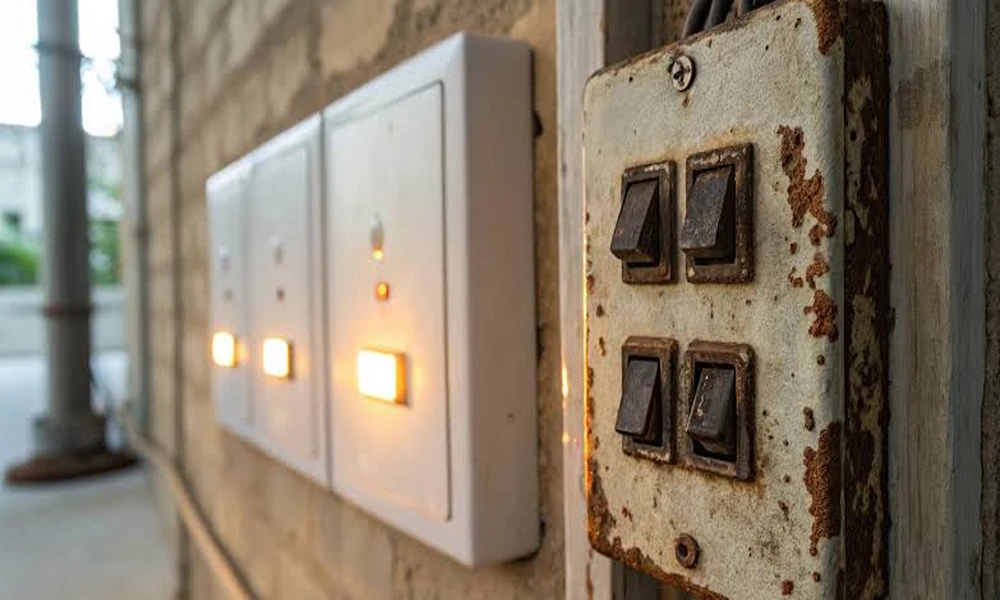
Electrical panels in Sonoma are being asked to do far more than many were designed for. Older homes may still rely on 100 amp services, legacy equipment, or wiring installed decades before EV charging and battery storage became common. At the same time, wildfire-related outages have made backup power more valuable, while California’s 2025 Electrical Code, effective January 1, 2026, is based on the 2023 National Electrical Code. The result is that a panel can appear functional while still being poorly suited to the home’s next major electrical project. The California Building Standards Commission confirms that the current Title 24 code cycle took effect statewide at the beginning of 2026.
Homeowners considering panel upgrades in Sonoma can work with Anderholm Electric, which specifically lists Sonoma and communities throughout Sonoma County among its service areas. Its services include conventional and SPAN smart panels, electrical service upgrades, modernization of older wiring, Zinsco, Sylvania and Federal Pacific replacement, EV chargers, generators, backup batteries and emergency electrical work. That combination can be particularly useful when the project involves both the panel and a future load, rather than replacing equipment without considering what the house will need next.
1. Your Panel Has Spaces but Not Enough Capacity
What you see. Several breaker positions are still unused, so it appears that another large circuit should fit easily.
What it means. Empty spaces and electrical capacity are different things. A panel can physically accept another breaker while the service supplying it is already close to its calculated demand.
This becomes important when adding an EV charger, electric water heater, heat pump, induction range, spa, workshop equipment, or other substantial load.
The real test. Electrical load calculations matter more than the number of unused spaces. California electrical requirements use calculated demand to determine whether the existing service can safely support additional loads.
An EV installation illustrates this well. Permit documents used in Sonoma County require service-load calculations for many charging installations, along with information about the main panel, breaker size, conductors and charging equipment. That forces the project to consider the house as a whole rather than treating the charger as an isolated circuit.
2. You Are Planning an EV but Want to Avoid Oversizing
Current need. Level 2 charging can represent one of the largest continuous electrical loads added to a house.
Traditional solution. The automatic response was often to increase the electrical service.
Modern alternative. Load management can sometimes change the calculation. Smart panels and compatible charging equipment can control when certain loads operate, potentially allowing a household to use available capacity more strategically.
That does not mean a service upgrade becomes unnecessary in every case. Homes with multiple EVs, electric HVAC, electric cooking and other heavy loads may genuinely need more capacity.
The important distinction is planning versus guessing. A 100 amp or 125 amp service should not automatically be condemned because an EV is coming, and a 200 amp service should not automatically be assumed sufficient for every electrification plan.
3. The Panel Belongs to an Older Generation of Equipment
Warning sign. The house contains older Zinsco, Sylvania, Federal Pacific or similarly dated equipment.
Why it matters. An electrical panel is not judged solely by whether power currently reaches the outlets. Age, breaker condition, bus condition, prior modifications, available replacement components, overheating evidence and compatibility with current loads all matter.
Sonoma County contains a broad mix of older homes where electrical systems may have been expanded in stages over decades. One circuit may be original, another may have been added during a kitchen renovation, and additional equipment may have been installed later without the entire system being reconsidered.
What to inspect. Heat discoloration, buzzing, damaged breaker connections, improvised wiring, repeated tripping and signs of corrosion deserve professional evaluation.
The need becomes more significant when the same house also contains knob and tube wiring or older branch circuits. Replacing the box alone does not modernize everything downstream.
4. Backup Power Is Becoming Part of the Plan
Old objective. Keep normal household circuits operating from utility power.
New objective. Decide which circuits should remain available when utility power disappears.
That change is particularly relevant in Northern California because PG&E can initiate Public Safety Power Shutoffs during conditions that create elevated wildfire risk. PG&E advises customers to prepare for possible shutoffs and even specifically recommends keeping EV batteries charged when a PSPS may occur.
Generator approach. A generator can support selected circuits or, depending on system design and capacity, a larger portion of the house. Safe transfer equipment prevents generator power from feeding back onto utility lines.
Battery approach. A home battery can provide quiet automatic backup, but runtime depends heavily on which loads remain energized.
Smart-panel approach. Circuit-level controls can prioritize refrigeration, lighting, communications and selected receptacles while temporarily limiting high-demand equipment.
This makes panel design part of resilience planning rather than merely an electrical maintenance decision.
5. A Simple Replacement Has Turned Into a Permit Project
What changes. Replacing electrical service equipment involves more than mounting a new enclosure.
Permit review, inspection and utility coordination can enter the process, particularly when service capacity, meter equipment or connection to the utility changes.
Permit Sonoma’s public records show electrical service replacements and 100 to 200 amp upgrades being processed as building permits, including like-for-like panel work and larger service changes.
City versus county. A property within the City of Sonoma may follow a different administrative process from an unincorporated Sonoma County address. The California Electrical Code establishes the statewide baseline, but the authority having jurisdiction administers permits and inspections locally.
Utility role. A service upgrade may also involve PG&E because the utility side of the service, meter configuration or available transformer capacity may need review.
That coordination should happen early. Selecting equipment before confirming utility and jurisdiction requirements can create unnecessary redesign.
6. Your Next Upgrade Depends on Several Systems at Once
The trigger. One project leads to three others.
A homeowner may begin with an EV charger and discover limited service capacity. A battery project may reveal that the existing panel is poorly arranged for critical loads. A remodel may expose deteriorated wiring. An older electrical service may need replacement before a generator or new electric appliance can be added safely.
The better approach. Map future electrical demand before selecting the new panel.
Consider likely loads over the next several years:
EV charging may increase demand substantially. Battery storage may change how circuits are prioritized. Electrification can add heating, cooking and water-heating loads. Solar may introduce utility interconnection considerations. A generator may require transfer equipment and a carefully selected backup-load strategy.
PG&E’s backup-power programs demonstrate how equipment compatibility can matter at the utility boundary. For example, its backup power transfer meter program imposes specific service-panel and generator requirements for participating homes.
What this changes. The ideal replacement may not simply be a larger conventional panel. In some homes, a conventional 200 amp service may be appropriate. In others, a smart panel or load-control strategy could provide better visibility and flexibility. Another house may need both service work and wiring modernization before advanced energy equipment makes sense.
The broader lesson is that panel age alone does not determine whether replacement is justified. The more useful questions are what the house draws today, what it will draw tomorrow, whether the existing equipment is in sound condition, and how the property should behave during an outage.
For Sonoma homeowners, that means evaluating the panel alongside EV plans, battery storage, generator needs, older wiring, utility requirements and California’s current electrical code. When those pieces are considered together, an upgrade becomes less about replacing a metal box and more about creating an electrical system capable of supporting the next decade of the home.

Comments are closed.