

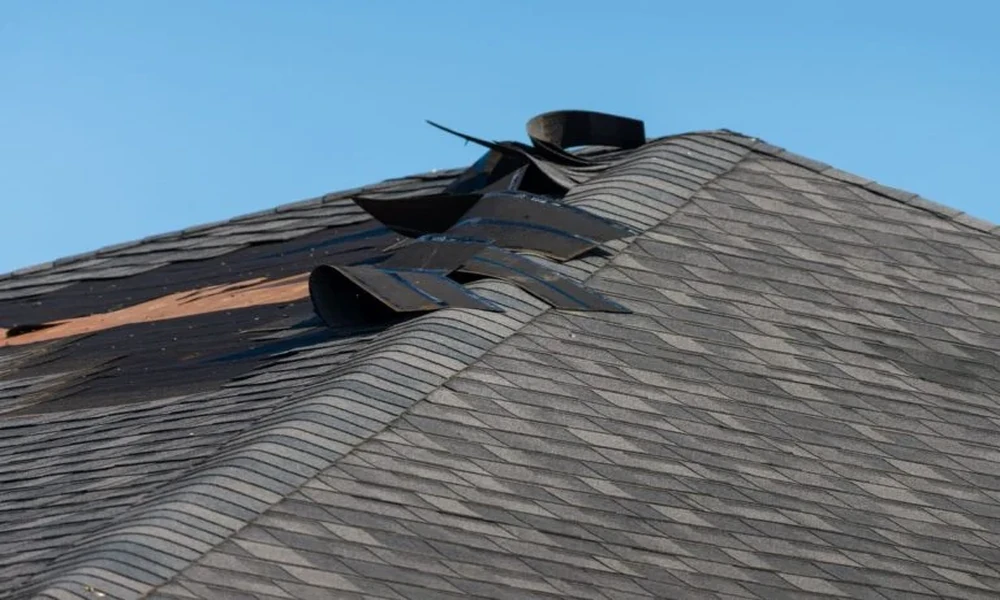
Three weeks after a hailstorm rolled through your neighborhood, your ceiling shows a faint brown ring. By then, the leak has been dripping into your attic insulation for days. You didn’t see it, because you never went up there.
That’s the thing about roof damage. It rarely announces itself. Shingles bruise, flashing pulls loose, and granules wash into your gutters while everything looks fine from the driveway. The damage keeps working quietly until it shows up as a stain, a soft spot, or a repair bill five times bigger than it needed to be.
This guide walks you through where to look, what to photograph, and when to stop poking around and call someone who climbs roofs for a living.
Why Hail and Wind Damage Hide So Well
Asphalt shingles are designed to look tough. They have a granular surface that protects the asphalt underneath from ultraviolet light, and when hail hits, it knocks granules loose and bruises the mat below. The shingle stays in place. It still looks like a shingle. But its ability to shed water is compromised, and the next hard rain finds the weak spot.
Wind works differently. Gusts don’t always rip shingles off. Often they lift the edge of a shingle just enough to break the sealant strip that holds it flat. Once that seal is broken, wind-driven rain slips underneath and travels sideways, sometimes several feet from where the damage actually happened.
If you’ve ever wondered why a leak shows up in a hallway closet with no roof above it, that’s usually the answer. Water enters uphill and travels along the decking before it finds a way through.
The National Weather Service tracks severe storm reports across the country, and areas like the Midwest see a steady stream of hail and straight-line wind events every spring and summer. You can check weather.gov for local storm reports after a big system moves through, which helps you connect the dots between a dated storm and damage you find weeks later.
What to Look For From the Ground (Without a Ladder)
You don’t need to climb anything to gather useful information. Grab a pair of binoculars and walk your property after the weather clears. Start with these five checks:
- Granule buildup at the base of downspouts. If you’re sweeping up piles of sand-like grit after a storm, shingles are shedding their protective layer.
- Dented soft metals. Gutters, downspouts, vents, and the metal caps on your chimney take hits that shingles sometimes absorb. Dents there mean hail was large enough to bruise roofing.
- Lifted or missing shingle tabs. Look at the ridge line and the edges near gables. Those areas catch wind first.
- Dark spots or shiny patches on the roof surface, which can indicate bruised mat or exposed asphalt.
- Debris punctures. A branch doesn’t have to be huge to break a shingle seal. Even small impacts matter if they land in the wrong place.
Write down what you find and the date you found it. Photos taken from the same angle over several days can show whether damage is spreading. I’d rather you over-document than under-document, because insurance adjusters work from evidence, not memory.
Why the Attic Is Your Best Diagnostic Tool
Here’s where most homeowners stop, and it’s the wrong place to stop. The underside of your roof deck tells the real story.
Go up with a flashlight during daylight hours. Look for:
- Water stains on rafters or the underside of decking
- Daylight coming through the roof boards
- Damp or compressed insulation
- Rust on nails sticking through the deck
- Musty smells that weren’t there before the storm
- Nail rust is the one people overlook. It means moisture has been sitting in the wood long enough to oxidize metal, which usually points to a slow, ongoing leak rather than one storm event.
If your attic isn’t accessible or you find active moisture, don’t keep digging. Water plus insulation plus warm attic air is a recipe for bigger problems, and the sooner someone trained gets eyes on it, the cheaper the fix tends to be.
The Three-Pass Roof Check I Actually Use
Over the years I’ve settled on a simple sequence for evaluating storm damage. I call it the Three-Pass Check, and it keeps me from missing things in a rush.
Pass one: the perimeter. Walk the full exterior at ground level, checking gutters, downspouts, siding, and anything attached to the roof. This tells you the storm’s direction and intensity.
Pass two: the interior. Head into the attic and any upper-floor rooms with ceilings under roof planes. Note stains, moisture, and anything that smells wrong.
Pass three: the surface. This one requires either a safe roof access point or a professional inspection. Trained eyes look for bruising, seal breaks, flashing damage around chimneys and vents, and problems at valleys and penetrations.
The first two passes you can do yourself. The third one is where experience pays off, because damage that looks like nothing from six feet away often looks obvious from six inches.
What to Do Before You Call Anyone
Timing matters more than people realize. Most homeowner insurance policies have time limits for filing storm claims, and requirements around documenting damage. Check your policy documents before you assume you’re covered or that you’re not.
Here’s a practical checklist:
- Photograph everything you found, wide shots and close-ups.
- Note the date of the storm and the date you found damage.
- Save any receipts for emergency measures like tarps or temporary patching.
- Don’t throw away damaged materials if you can avoid it, since adjusters may want to see them.
- Get an inspection before you call your insurer, so you know what you’re dealing with.
The U.S. Census Bureau publishes housing data that shows how much of the country’s housing stock is older than a couple of decades, which matters here because aging roofs take storm damage harder than new ones. If your roof is past the halfway point of its expected life, an inspection after a major storm isn’t optional in my book. It’s how you avoid getting caught off guard. You can browse the agency’s housing statistics at census.gov if you want context on regional housing age.
When to Stop DIY and Call a Pro
There’s a clear line between inspecting and repairing. You can inspect safely from the ground and from inside the attic. You should not be walking a pitched roof after a storm, especially if shingles are compromised and you don’t know which ones will hold your weight.
Beyond safety, there’s the insurance side. Most adjusters want a professional assessment because it carries more weight than a homeowner’s photos alone. And if repairs are needed, the work has to be done to code or the next claim gets complicated.
For homeowners dealing with storm damage roof repair in St. Louis, working with a local contractor who understands regional weather patterns makes a real difference. St. Louis sits in a corridor that sees everything from hail to derechos to ice storms, and a roofer who knows that mix reads damage differently than someone who’s never worked in the area. storm damage roof repair in St. Louis teams can walk through the property, document findings, and provide a written report you can hand to your insurer.
That report matters more than most people think. It’s the difference between an adjuster saying “we’ll cover what we can see” and having itemized evidence of what actually happened.
One More Thing About Timing
Roof damage doesn’t always turn into an emergency in the first week. Sometimes it takes a season. Ice expands in the winter. Heat bakes the exposed asphalt through the summer. Each cycle widens the crack a little more.
That slow burn is why the answer to “when should I check my roof after a storm” is almost always “sooner than you think.” Not because every dent means disaster, but because small problems are cheap to fix and big ones are not. A few minutes with binoculars and a flashlight could save you thousands of dollars and a lot of stress.
So here’s your assignment: next time the sky clears after a serious storm, grab a notepad and walk the property. If something feels off, get it looked at. Your future self, the one not dealing with a sagging ceiling and a mold problem, will thank you for it.

Comments are closed.