Author

Paul Watson

Browsing

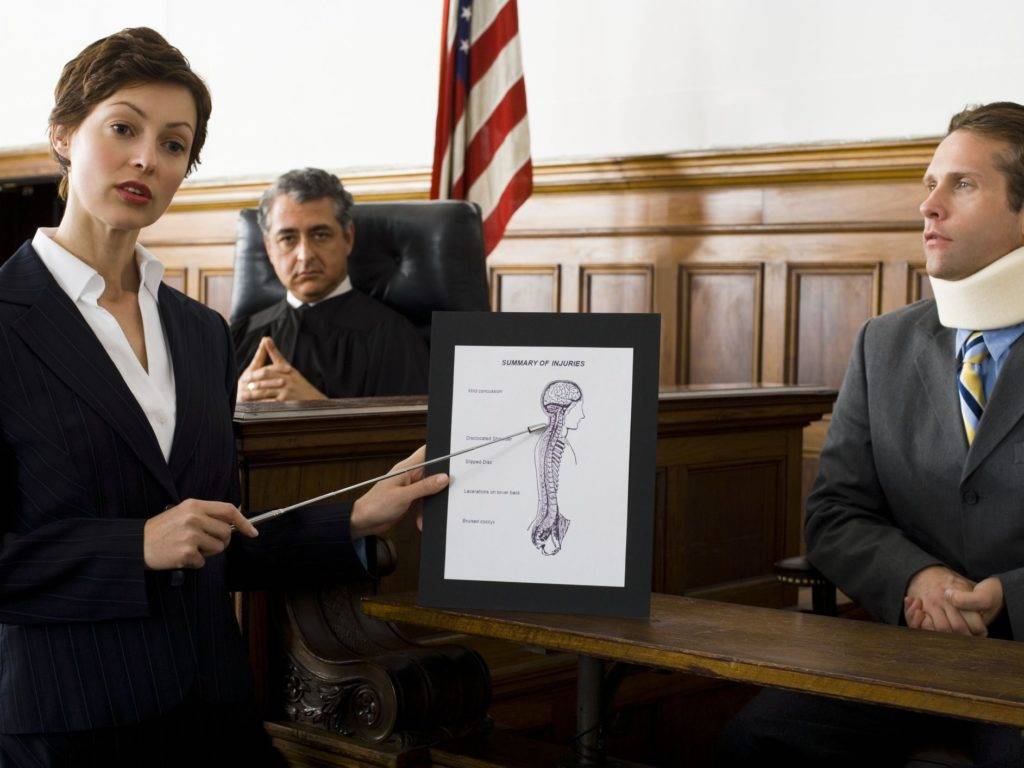
Worker’s compensation is a lifesaver when it comes to accidents that occur when on the clock. You may have been doing all you can to follow safety protocols, yet, conditions simply did not work in your favor. These suboptimal work conditions may have resulted in your becoming injured, regardless of your precautions. Instead of having to accept the loss of work as a result of your injuries, and therefore the loss of income, you are eligible to receive financial support from your employer’s insurance provider. After your work-related injury, there are several disability insurance programs that you may be eligible for to off-set the financial hardships. There are a few key details to be aware of when seeking compensation for your work-related injuries.

What to Know About Worker’s Compensation

Before you begin considering the types of disability programs available to you, be aware that the time required for qualification may vary. This is due to several different factors that may or may not contribute to the severity of your condition. For example, if your injury resulted in a lasting medical condition, you may have to endure many more complexities and steps of the legal process before reaching a settlement. Short-term illnesses or conditions are likely to proceed much more quickly and may be much more straightforward to address for the insurance provider.

Additionally, you must first ensure that you are eligible for receiving disability benefits. If you meet the following criteria, then you can pursue compensation for your injuries:

  • Your employer is enrolled in a worker’s compensation insurance program.
  • You are an eligible employee (check your employer’s policies).
  • The injury or illness is covered by the worker’s compensation program.
  • Your worker’s compensation claim is filed according to the state-specified procedures.

Once you determine your eligibility, you can then proceed with filing your claim and discover which programs apply to your circumstances.

Types of Disability Programs Available to You

There are three primary types of disability benefits you may qualify for. These are:

  • Social Security Disability Insurance (SSDI): This program is managed by state and federal governments. It is meant to supplement the recipient’s monthly income, under the condition that they have been made to be totally impaired, physically or mentally, by their work-related injury or illness. Those who qualify are U.S. citizens that meet the federal definition of “disabled” and who have paid into the system from their wages for a certain period.
  • Private Disability Insurance (Long or Short-term): These are programs operated by private insurers. They offer benefits only to individuals who either have paid for the policy themselves or are covered by their employer. Only those who are deemed “insured persons” are eligible for this type of coverage. (This is most likely the type you will receive through worker’s compensation.)
  • VA Disability (Department of Veterans Affairs Disability Benefits): Of course, this only applies to veterans. This program is operated by the Department of Defense and is specifically meant to cover injuries, illnesses, and other conditions that are directly related to the individual’s service. Those eligible are veterans holding honorable or general discharge.

As you begin to narrow down your options for compensating your work-related injury, review your company policy and the details surrounding your injury. This will assist you in determining which program is most appropriate to support you as you wait to return to the workforce.

Starting trading as a part-time trader is a very challenging task. Many people start working as a part-time trader and end up losing a huge amount of money. If you take the time to focus on the core concepts of trading, it won’t take much time to learn about part-time trading. It is not that hard. But starting anything new is always very challenging. People often fear starting something new as they don’t know how to manage things. To make things easier, we are going to focus on some of the key steps that will allow you to become a successful trader. If you can follow the rules mentioned in this article, you can trade as a part-time trader also.

Start observing the market

You must have the ability to observe the market from a trader’s point of view. Very few traders in the Forex market analyze the market dynamics without any emotional attachment. They become emotional and take trades. But the top traders in the UK take the trades with managed risk and they focus on the core factor of discipline. By analyzing the price dynamics, you can create a simple trading module which will help you to make a profit in the long run. Though it will be a little bit complex at the initial stage once you learn to focus on the core factor of the market, you will be able to make some serious changes.

Analyze the price data

You must analyze the price data with a high level of precision. Taking the trades with high risk and trying to win to recover the loss is not going to work. The professional analysts at Saxo capital markets always place emphasis on quality market analysis as it gives them a clear clue about the potential price movement of the instrument. Things might be tough at the initial stage but once you learn to take the trades with managed risk, you will fail to survive in trading. Some of you might have good knowledge about the price action trading module. But the price action trading system is very hard to learn and you might not be able to make a consistent profit.

Start practicing more

You need to practice a lot to become a professional trader. Without practicing the core details of the market, it will be tough to secure consistent profit.At times, you might think demo trading is nothing but a waste. But if you take the time to focus on the core factor of discipline, you will know trading is nothing but following the strict guidelines. The blessings of the demo account are enormous in human life.

With sticking to the demo account it is important to make a consistent profit. After you gain the confidence to trade in the demo environment, you can start taking the trades as a part-time trader. The part-time traders should never trade the market with aggressive steps. Taking too much risk to secure a big profit is a very big mistake.

Prepare a robust trading plan

You must prepare a robust trading plan to become a profitable trader. Unless you can trade this market with discipline, you can’t do anything as a part-time trader. A valid trading plan should allow you to take trades in the most complex situation. Most importantly, it will help you to make money in any market condition. Before you take the trades in the market, you should be careful enough with the execution process.

Conclusion

Elite traders always take trades with a low-risk profile. Some of them are part-time traders. Still, risk management factors are the most important issues for placing the trades. Take the time and try to improve your skills. Focus on the core factors of the market and you will slowly learn to take trades with discipline.

The COVID-19 infection cluster centred on the Cedar Meats processing facility ion Melbourne has proved to be one of Australia’s largest and most problematic. And the same situation has been experienced in meat processing facilities around the world, including in the US, Canada, Spain, Ireland and Brazil. A recent article, for example, identified that one of the fastest-growing outbreaks in Texas was associated with a meat processing facility in a small town in the north of the state.

So what is it about these facilities that create an environment ripe for the highly infectious virus to proliferate? It seems that the combination of proximity working, combined with frigid and humid conditions and a particular approach to ventilation is the most significant contributing factors. The suggestion is that in these conditions, the generally accepted social distancing norm of 1.5 to 1.8 metres is insufficient to prevent community transmission, precisely because of the nature of the ventilation.

This comes down to the nature of the virus particle and the way it spread. First, the cold, moist conditions allow it to persist for longer in the environment. Second, its minute size means that it is easily borne in the air, attached to droplets of water, in the form of aerosols (this is the health description of minute airborne pathogens such as viruses and bacteria). Finally, the intense ventilation that is required in these facilities to keep the meat fresh is responsible for moving the virus particles much further than the 1.5 to 1.8 metre recommended distance between workers.

It is already clear that socially enclosed spaces create ideal conditions for the spread of COVID-19 – in Australia, the other two significant sources of virus clusters have been cruise ships and aged care facilities, both of which share close interpersonal conditions and significant internal ventilation requirements. However, there are other forms of manufacturing and processing that involve people working in close proximity in enclosed, ventilated spaces.

As knowledge about COVID-19 continues to grow rapidly and businesses, public health authorities and governments attempt to identify mechanisms to prevent or reduce its spread, it is becoming clearer that high quality, well maintained and properly operated ventilation systems are essential. This will become increasingly important in Australia as social distancing and self-isolation requirements are eased, and people start returning to work in office environments in particular.

It will become increasingly important that shared workspaces, whether in manufacturing and processing, health care or office buildings, will require improved and updated ventilation systems that are capable of managing the risk to workers.

However, it is not feasible for all workplaces to immediately replace ventilations systems. In this instance, there are a number of recommendations and adjustments that can be made to existing systems to mitigate the risk of infection. These include:

  • Increasing ventilation rates and increasing the proportion of outside air in ventilation exchange. This will help to ensure that air which potentially contains pathogenic aerosols is ejected faster, reducing the threat of infection.
  • Increase the operating time of ventilation systems to include before and after normal business hours, and preferably through the night to ensure cleaner, unpolluted air is brought into the building.
  • Have the ventilation system inspected by a professional service provider to ensure it is correctly set up, serviced and maintained, in line with the manufacturer’s requirements.
  • Ensure filters are clean and, if required, consider the installation of higher grade filtering material.

Regardless of what you are manufacturing, the finished quality of the product will be an essential consideration for customers. Whether it’s vehicles or manufacturing components, metal, carbon fiber, or plastic, the final finish speaks volumes about the overall manufacturing quality.

And like all elements of the manufacturing process, the paint finishing process must integrate seamlessly with the overall production systems, delivering efficiency, reducing waste, and minimizing or removing re-works.

Manufacturing is not a one-size-fits-all exercise. The most effective and highest quality product comes from custom-designed facilities, manufacturing equipment, technology, and support systems. That principle applies equally to thefinishing stages of the manufacturing process. If you’re building cars, your painting and curing facilities will have different requirements than if you are manufacturing aeronautical panels, or trains, or smaller plastic componentry.

That means to deliver the best results; you need to focus equally on the manufacturing paint finishing facilities and systems as you do on the rest of the build process.Ideally, that means you will need to consider a bespoke, custom-designed, and built painting and curing facilitythat integrates with the rest of the manufacturing process and delivers outstanding results most efficiently.

In addition to supporting and integrating with the overall manufacturing process, a custom-designed painting and curing facility will operate efficiently to eliminate waste and reduce input costs, deliver consistently high-quality paint finishes, ensure the safety of operators and utilize the latest and best technology. Whether it’s an entirely new paint finishing facility or an upgrade to your existing painting and curing system, it is critical to consider engaging the best industry experts to deliver a customized, high quality, and efficient facility.

DRYSYS Spray-Cure is the leading provider for the design, construction, and commissioning a range of high performance, efficient and innovative paint finishing facilities or entire paint shops. Spray-Cure’s facilities are extensively used by manufacturers and re-finishers for all types of vehicles and can be designed for carbon fiber, metal, and plastic components of all sizes.

Utilizing industry-leading expertise, combined with high-quality devices and proven equipment, and applying the latest in programmable logic controls (PLC) to ensure safe, efficient, and consistent outcomes, Spray-Cure can design, construct and install facilities to suit any manufacturing process.

At the heart of Spray-Cure’s approach is a genuine commitment to partnering with our clients and customers to deliver consistently outstanding results. Our in-house expertise means that we will work with you closely to understand your manufacturing requirements, opportunities, and constraints to ensure our custom-designed facility integrates seamlessly with your existing processes. And we operate as a single-source supplier, so you don’t need to be distracted with project managing a range of service providers and running the risk of under-delivery through poor communication or planning.

Spray-Cure’s holistic systems covering process, application, conveying, controls, automation and supervisory technology, for all types of vehicles, carbon fibre products, and metal and plastic components, deliver bespoke, outstanding results for manufacturers in any industry.

If you have been thinking about remodeling your bathroom, you have probably spent a considerable amount of time on the shower. The cost of renovation on a standard 36 to 40 square foot bathroom can easily reach $10,000 to $20,000, which includes floors, shower, sink, and everything else in between. You can check out https://www.mimicoco.com.au to get pricing and design ideas that will help you prepare for a project of this magnitude. You will find that merely renovating the shower can make all of the difference. Think about it: what is the first thing you would show off in your bathroom? Certainly not the toilet and probably not the sink. The shower stall is the crown jewel, and can easily increase the value of your home and impress your guests.

Choosing the Ideal Glass

Regardless of the style, you are shooting for, glass always looks impressive and beautiful. If you are after a more modern and sleek aesthetic, using clear glass and aluminum framing is the way to go. Size matters, and if your bathroom can fit it, go with at least a 3 foot by 5-foot shower stall. This will make your bathroom stand out and make a statement. Even with a more traditional style bathroom, something like textured glass with gold hardware will look sharp.

Shower Walls

With all of that glass leaves the shower walls visible to the world, or least your spouse, who may have strong opinions towards an option. Starting again with the modern aesthetic, white tiles look absolutely stunning. The combination of aluminum framing, glass enclosure, and white tiles gives your bathroom a modern and futuristic look that will immediately catch the attention of your guests. Other considerations include adding a colored tile pattern through the white tile to break it up and give it some character. In fact, textured and patterned tiles are exactly the direction you should go to get a more traditional appearance.

The Shower Head

Once you make it beyond the foundational shower decisions, the finer details come into play. This includes things like showerheads, lighting, and any even seating. Showerheads come in a wide variety of shapes, sizes, and power. Aesthetically, you want to pick a shower head that matches the hardware of your doorknob(s) and faucets. For practical reasons, you can get an adjustable handheld shower head that can make rinsing off easier. If you prefer the classical style, wall-mounted stationary styles will suffice.

Picking the Lighting

Lighting often becomes one of the forgotten details of bathroom design, but it is one of the most important aspects. The lighting impacts the overall look of the shower and bathroom. In general, diversity is the key. For example, bright recessed task lights get you going in the morning, while soft mood lighting is perfect for showers before bed.

Conclusion

These are just a handful of aspects and ideas for remodeling the shower into a dream shower. You can do so many things, such as tub and shower designs, indoor and outdoor showers, skylights, and much more. Regardless of all the other fine-tune details that collectively make your bathroom complete, your shower is the centerpiece of the bathroom, and the implementation of even a few of these options will transform it into something of significant value.