Category

Tech

Category

The current year has been disruptive for businesses around the globe. The ongoing 2020 Covid-19 pandemic has forced companies to make WFH a regular option, and for at least a year to come, we will have to deal with social distancing and related protocols. As more employees work from home and companies continue to operate in complex & hybrid IT environments, cybersecurity remains a concern. Cyber threats come in various forms – right from backdoor exploit to phishing scams and malware attacks. 

This brings us to the question – Is your company doing enough for cybersecurity in 2020? Here’s what every company must focus on, particularly in current times. 

  1. Create WFH policies. From recommending a premium VPN for your employees, to offering them devices to work from home, there are various steps that companies can take, depending on their budget and requirements. When employees are working from home, you want them to be productive and more careful about how they access company resources. 
  2. Guidelines for password management. Creating strong & long passwords is important, and you may have to recommend a password management tool for your employees. Ensure that employees don’t make mistakes like retaining default passwords, using same password for different devices and accounts, and reusing old passwords. 
  3. Consider added security. For ensuring better cybersecurity in 2020, you have to add extra layers of protection. A good idea would be to enable lockout feature for accounts and devices, so that brute force attacks can be prevented. Next, use two or three-layer authentication where needed. 
  4. Focus on access. From managing access to your IP cameras and recorders, to handling servers, networks, and other networked devices, there should be a clear means to manage access rights. If possible, go for a reliable Identity & Access management suite. 
  5. Spend on training. Regular webinars and web meetings can be handy in training employees for cybersecurity in 2020. This year, employees would have to handle a lot more risks on their own, without direct assistance from the security department, so they need to be updated. 

Finally, don’t miss on having an incident response plan, so that everyone knows what must be done in time, so as to reduce damage and consequences, in case a breach occurs. The idea is to prevent security breaches and cyberattacks in the first place, and for that, nothing will matter  more than collaboration between teams and people within an organization. 

From movies and television to books and comics, so many works of fiction have made use of technological advancements from the corners of different creators’ imaginations to feed the story and build a world filled with adventure and intriguing plots that keep moving forward. Some of these gadgets and tools have become a reality, though, and are already available for different uses today. Read on for some interesting devices that have been previously seen in the annals of fiction.

  • MSAT Satellite

You may have watched Jodie Foster sift through alien radio signals in Contact or played through the mystery game Firewatch. You may have even marveled at the possibilities that could lie with just a satellite walkie talkie but thought that the capabilities they’ve displayed in those stories were stretched for convenience to the stories. However, today there are MSAT satellite radios that make use of 23,000-foot towers to allow fleets to communicate with each other from the edges of the world. This technology uses push-to-talk functionality that works on land and sea and does not rely on the internet to function 24/7.

That makes it one of the interesting infrastructures currently being used in various trades that straddle the line of the old and new by using existent tech that has merely been upgraded to a more powerful and unprecedented version to be used more effectively.

  • Hoverboard

Sure, these aren’t quite as commercially available as the Back to The Future franchise may have led us to believe, but they exist now. They are constantly being upgraded and improved to make those easy-cruising dreams come true eventually. Many variations from companies are trying different approaches to achieve both the visual and practical goals that have been created by Sci-Fi’s presentation of the hoverboard. Some of the most promising ones make use of quantum mechanics and magnetic fields. Though this has seen limited hover time, it’s hit closest to the mark and marks a promising move toward what the future might look like for hobbyists and transportation with enough research and further funding.

  • Full wall TV

Ray Bradbury created many of the most iconic works in science fiction that are lauded today as predicting many of our modern-day knick-knacks, social habits, and gadgets. Among his many imagined tech pieces is the flat-screen television that essentially encompasses a whole wall. It produces a much clearer picture than a projector would and boasts all the capabilities consumers look for in their TVs today. The product that meets Bradbury’s descriptions is Samsung’s offering, “The Wall.” With MicroLED technology, the screen spans 292 inches and is capable of 8k resolution. This entry is a stunning luxury display that is a hallmark of society’s ever-growing fascination for consuming digital media and having tools to make it an intrinsic part of the 21st century’s daily lifestyle.

More and more innovations continue to pour out of inventors and major tech companies that cater to both the common public and massive industries that keep society running. With the way things are going, it seems like anything fiction can be made a reality by tomorrow.


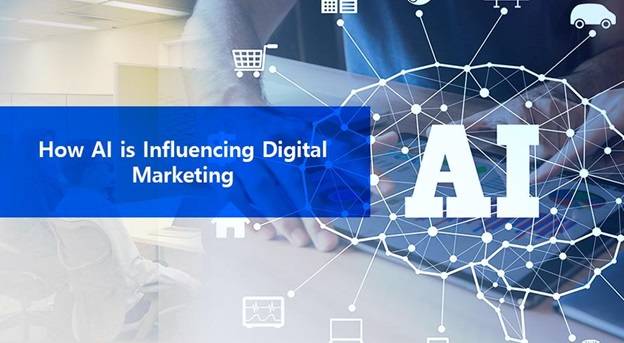
The rapid growth of Artificial Intelligence (AI) and its infiltration to every other technological field have been immense, but not easily grasped by most. One of the fields impacted by AI in Digital Marketing, which is a major source of bread and butter (directly or indirectly) for those flocking the web.

Since its inception, AI has had both, opponents and proponents, debating over its incredible growth. Its proponents wholeheartedly vouch for the potential miracles AI can birth due to its capacity to store and analyze tons of data that no human mind can even perceive. Consequently, it can assess, analyze, and establish facts with bladelike precision that can foster more informed decision-making at every turn.

Conversely, the overwhelming influence of AI has been met with suspicion and fear of its negative effect on humankind. Apart from the long-held paranoia graphically depicted in sci-fi and literature that machines and robots may conquer humanity with the aim to enslave or annihilate it, other objections stem from the lack of privacy due to Machine Learning’ insatiable hunger for data.

Lastly, many fear that intelligent machines would steal employment from millions of people around the world. Even prominent tech personalities like Bill Gates have had the notion of taxing robots to counter the loss of income for those left out of their job due to increasing automation.

There has been a lot of debate over the effect of automation on marketing, and the overall economy, but the concept of AI rendering individuals destitute is not sensible. In fact, the trend we have been witnessing in technology, apart from direct job creation, is to assist humans in making their jobs easier.

The Role of AI in Marketing

While predicting what role the AI might play in marketing and to what extent it will transform the field in the foreseeable future, we must assess where AI is currently making progress in marketing:

  • Personalized services delivered by Armour, such as health and fitness recommendation provided via smartphones
  • Macy’s On Call AI-powered shopping assistant delivering customized services, also available in Spanish to cater to its wide range of audiences.
  • Using voice commands to add items to the cart in Amazon and Tesco e-stores.
  • Voice-activated assistance provided by Amazon’s Alexa and Google Home.
  • Airbnb pairing up its millions of users with appropriate accommodations.

Even Internet Service Providers such as Spectrum Servicio Al Cliente, are infusing such technology into their customer service to streamline their support process.

These instances of AI-powered software at work doesn’t surprise us anymore as they have become quite rife in our industry, most do not even perceive that it’s AI behind all the intelligent responses of the app.

Not so long ago we believed that intelligent voice-activated devices such as speakers like Alexa and Google are the stuff of science fiction fantasy, confined to programs like the Jetsons.

However, today these voice-activated speakers grace millions of homes across the globe, and by 2030, we may consider them a common household staple like microwave and TV.

This development may as well change the landscape of digital marketing as myriad tools such as PPC, social media, etc, will be armed with a voice-activated protocol. Such as content linking to a voice-activated device, which may further take action like signing up, ordering, or requesting callbacks.

The Workings of Big Data

The use of big data has contributed to delivering personalized marketing messages and services to customers. Case in the example is of Airbnb that gathers data of its customers for its machine learning endeavors that pinpoint what a user wants by analyzing their past interaction, experiences, and actions.

Moreover, we have witnessed plenty of e-commerce apps that assess a user’s past purchases and send targeted marketing messages accordingly. Such as customer purchasing hair accessories at Amazon would later see many similar ads by other providers, and may get similar product recommendations as they visit the e-store again.

This may have consequences for buyer personas in marketing such as recording of user behavior and its analysis by AI can conjure more on-point buyer personas. Moreover, this may help detect emerging trends in customer behavior much faster than traditional marketing research techniques.

Buyer personas can now be personalized to individual levels, with marketing messages delivered as per the needs of a specific group in unique circumstances. Moreover, the personas can even be finely focused by taking other factors such as seasonal, in which we determine how much a customer spends during a certain holiday.

What the future beholds

The gathering and analysis of customer data have proven to be quite a boon for marketers as it has helped deepen the understanding of customers to an individual level. However, concerns regarding the lack of privacy of users arise and the extent to which a marketer should access information about users. The issue has undergone hot debate while making legislation across the globe, including the GDPR rules developed by the EU or the Data Protection Act.

Which poses the dilemma that to what extent marketers can infuse AI and utilize data, and at what point the lawmakers may deem it too violating of individual privacy rights.

The emerging technologies and their ubiquitous adoption may require increasing use of data, but more legislations can prove to slow down the brisk adoption.

Any more regulations on the use of data in AI has cautioned marketers to employ it without impinging on customer’s privacy, and disclose how they are utilizing the data to customers in order to reassure them.

Baldwin Jackson is a successful digital marketer with expertise in search engine optimization and content marketing. The perfect balance of his analytical ability and creative thinking is what sets him apart from other practitioners in the digital marketing realm. He has helped a lot of small and medium-sized businesses in crafting their digital marketing strategies that are not only cost-effective but delivers results as well.

Baldwin is also a proud father of two kids and a Sports enthusiast. When he is not working, you will find him watching ESPN and NFL network. He has been able to get an amazing package on his favorite channels from Buytvinternetphone.com.


Over the past two decades, the adoption of all things smart and digital has improved many aspects of business. The introduction of email to the mainstream allowed businesses to correspond with their stakeholders more effectively than ever before. The use of social media opened new avenues for marketing, customer engagement, and branding for many enterprises. The vast improvements in data science have given organizations the tools to further improve and make more successful decisions. The information age has been particularly beneficial in business.

Today, these digital innovations still continue to help grow enterprises. If you manage or own a business, you know that these tools have become indispensable. And if you want to keep improving, here are five programs that make businesses run more efficiently.

Virtual Phones

One of the most productive changes in business in recent times is the move to more relaxed work arrangements. Working remotely, in particular, has increased productivity for organizations that try it.

According to Business News Daily, working from home adds another 1.4 days of worth of productivity each month. They add that this arrangement also reduces stress and contributes to a healthier lifestyle. Most companies that allow remote work also use virtual phones.

Aside from giving employees the ability to stay in contact wherever they go, virtual phones also reduce wait times during calls. The person who reaches out to the company is directed straight to the person concerned without going through the laborious transferring steps. The time and manpower saved here add up and result in more efficiency.

Timekeepers

Imagine having to manually note every single employee’s logs every single day. This is tedious and frankly too menial to devote anyone’s time. Timekeeping programs help businesses track their employees’ comings and goings in a more efficient and accurate way. It’s a simple, but highly effective application that compiles the workers’ logs and determines if they are late, under time, or absent. The use of these programs also significantly helps payroll in making sure everyone is paid what they’re due.

From the employee’s perspective, a timekeeping tool is also very easy to use and remember. With just a couple of clicks, they’ll be able to record their working hours for the day.

If you charge clients by the hour, there are applications that automatically calculate and produce invoices based on the amount of time spent on a task. This removes doubts and uncertainties for both your clients and your business.

American Express has published a helpful list of some of the best timekeeping applications out there.

Project Managers

Project management software basically gather all the necessary tools and data for a project and allow all the necessary people access to them. Imagine an online dashboard that contains information, links, tools, and others that can help teams work together in real time. These applications are usually the main ones people use when they’re at work. It also usually explains every task and its objectives in detail.

Employees love these collaborative programs because they allow for a more seamless exchange of outputs and ideas between people, even if they’re not in the same place. It also keeps everyone in the loop for updates and changes to what needs to be done.

Most of these programs offer different access types to different people in an organization. Managers can assign tasks, set deadlines, and check the progress of individuals. It can also serve as a tool for comparing performances and contributions across teams.

Front Office Managers

The client-facing side of businesses faces a shared challenge in that the customers may not always understand the same things or have similar goals with the organization. Front office management tools bridge this gap by being the one-stop-shop for engaging with clients. With these applications, clients can get and provide information, set appointments, and even make payments. Automating these things frees up the staff to address more complex concerns or perform more important tasks. It keeps interactions more efficient and intuitive.

It also has the benefit of recording and tracking interactions with clients for a more accountable experience.

In the healthcare industry, practice management software adds another layer of safety for both parties because it reduces the need for meeting and interacting in person. Now, because of Covid-19, this tool has the ability to help prevent further spread of the virus.

Feedback Gatherers

These applications give businesses the ability to ask for and gather feedback from inside and outside the organization. Feedback is highly important in business because it highlights areas for improvement and success. It also helps management get a pulse of the staff or clients while those on the other end also get a sense that they are being listened to.

Compared to traditional surveys, feedback applications are more efficient in gathering and compiling data. They also usually present this information in a more insightful and easily understandable manner. This whole process is automated, and the results are usually clean and complete enough for a presentation.


Running a business as efficiently as possible requires hard work, focus, and these applications.


Future business depends on it now

The mandated economic shutdown has affected many American businesses in ways that have never been experienced before. This is a time of economic uncertainties that will follow us well past the first year of the 20th century. The situation has created an unintentional economic downturn that will separate the smart forward-looking businesses from the businesses that are stuck in the past. It is not about getting back to work as much as how are we going to keep back at work. 

Do you think automation is a thing of the future? I have news for you it is a thing of the present. Many people will not even have the choice to return to work after all this is over. The business model of the past will not be the business model of the future. Advertising and marketing will change along with the business model. It will take years before the market stabilizes and businesses will feel confident enough, to again market the way they did. The marketing industry before COVID supported a feel-good, everybody happy, I’ll find the money kind of buyer. It has all changed. The company that employed the graphic designer to create advertising graphics will be replaced with simple clip art. Don’t think so? Watch and see. 

There is no more fancy, feel-good Nancy money to blow on these flowers and frills. The economy has been damaged to the point that a recession would be a good thing. It is down to damage control, trying to control the damage that has been done to small business in America. Advertising and marketing have always been loss leaders. There are only certain situations that allow you to recoup your advertising budget straight off the bottom line. The accountant’s job now is going to be to cut the fluff. Many advertising experts are reinforcing core purpose advertising for businesses during COVID. You can learn about the top 10 most successful businesses to start here. 

That may work we’ll have to see after all the economic dust settles. The ramifications of state and federal governments’ social-economic stimulus actions are going to cut deep into other social programs. There is not enough money to go around after the initial COVID expenditures are called in. The money will run out and that is what the smaller businesses are going to be left with. Times are going to get hard. Yes, businesses will need to advertise. However, it will be a while before the right market is realized and the average American consumer will be comfortable buying a big-ticket item because it looks nice and smells good. 

1% of the population holds most of the cash in America. It is going to take more than 1% to get America’s economy back on a solid foundation. Most consumers are going to stash some cash for the next COVID outbreak. That will stymie the economy for a little while and that’s for the people who will have a job after all this settles down. Marketing ideas during the COVID outbreak are very simple and straight forward. Stay inside, stay safe, and wait for the government to tell you what to do next. The problem with that is the government is unsure what to do next. 

Advertising and marketing ideas during COVID are especially difficult when so much anxiety and uncertainty about our current situation is all people are thinking about. Remain in front of your potential customers and try to ease their fears with messages of hope and resilience. That would be the best marketing strategy during the COVID outbreak. We are in very turbulent economic waters right now with all eyes on the shore.