
Archive

2020

Browsing

Building your first home is a monumental and exciting journey. It’s a big commitment and a showcase of the hard work and effort you have put into creating this future for yourself. Years of hard work got you to the point where you are financially able to build the enclave of comfort you’ve always wanted. Whether that’s a two-storey unit with floor to ceiling windows and a gorgeous sunroom or a large bungalow with ample space and a beautiful outdoor landscape – the possibilities are endless, and the choices are yours to make. One of the key decisions you need to make in order to realise this dream, is choosing the builder that will bring your dream home to life. It is vital, that you put in time, effort and care to ensure you are making the best choice for yourself and your finances. In this article, we will look at some important elements to consider when choosing your new home builder. 

Licenses & Reputation 

The first step is to know who you are working with. It is vital that you trust the builders you choose as they are the ones helping you complete this project from start to finish. Before anything else, you want to make sure whichever company or private contractor you talk to has the necessary licensing. Each state has different requirements, so a builders license in NSW will have slightly different qualifications to those in other states. You want to make sure the builders you’re working with has the right licensing for the state that you’re in. Aside from that, browse their website and social media profiles to see what others have said about working with them. If you have friends or family who have used a specific builder’s services before, get in touch to find out their feedback. You can also check the disciplinary register of your state’s building authority to ensure the builder you’re looking to contract has not engaged in any misconduct. The more you learn about the builder you’re looking to hire, the better and more secure you will be with your choice.  

Portfolios & Vision 

The next thing to look at is the past projects this builder has worked on and if they’re similar to the style you’re after. Most builders will have a gallery on their website of past builds, or if they don’t you can easily get in touch with them to ask for one. This step is important as it’s a good way to get a feel for the visions and home designs these builders are comfortable working with. If possible, try to do a physical walk-through of a home that they have built, as this will give you a clearer picture of exactly what they are capable of and if it meets the expectations you have for your home. If you want to be extra diligent, ask if you can get in touch with their current clients to find out what it’s like dealing with this builder when the actual construction starts. Don’t be afraid to talk to your builder about their past builds as well, as this can help you understand how involved they are and how much care they give to their projects. If the builder can’t talk you through all aspects of their previous builds, it’s likely that they aren’t very committed and invested in this home as much as you are. It’s not enough for your builders to just have a Certificate IV in Building and Construction (Building) – CPC40110, their experience and approach to every individual home build is just as important. 

Understanding and Working Relationships 

Most layman might not be familiar with building terms and the exact nature of the construction process. You want to make sure the builders you’re working with are upfront and transparent about everything. You can gauge this by the conversations you have with them. Do they explain things to you well or do they leave you slightly confused? If you have any questions, are they direct and straightforward with their reply? Trust is one of the biggest values you need to share with the builder you choose – and this starts with a healthy and open working relationship. 

Australia’s construction industry is filled with many talented, passionate and reliable construction workers. With time, patience and effort, you’ll be sure to find the perfect match to help you build that dream home. 
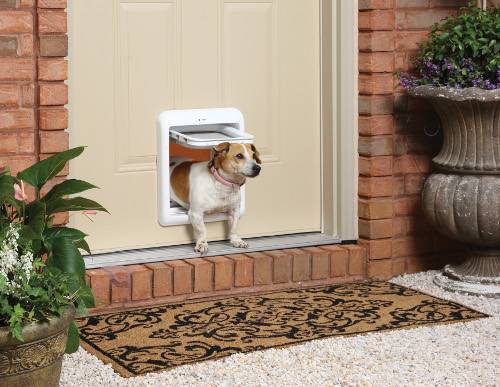


Life for your family and pets becomes much easier when you have a pet door at home. It frees up your schedule to do more things outside the house, and your pets enjoy the freedom to go outside and play. If you’re thinking about getting a pet door installed, you may be wondering about their security. “Would my kids try to escape out of the house through the doggie door?” “What if a burglar tries to get inside?” These questions are common for homeowners to ponder. We’ll cover everything you need to know about making a pet door safer at home.

Connect the Dog Door to an Enclosed Area

Think about where you would you like your dog door to be. You’ll have added security by connecting it to an enclosed area, such as a fenced in yard. The ideal fence should be tall enough to keep your pets in and intruders out. If the yard is gated, a good exterior lock will do the trick. A pet door for an enclosed porch enables a pet that is small or strictly indoors to have access to fresh air.

Get a Door with a Secure Locking Mechanism

Out here in Australia, you never know what creature can venture in through the door! Fortunately, there are a number of quality pet doors that come with a sturdy locking mechanism. A regular PVC locking cover can get brittle and crack in the intense sunshine of the Southern Hemisphere. Composite is a sturdy material that will last much longer. A stronger material is more secure.

Invest in an Electronic Door

Thanks to the power of smart technology, there are even more options available to secure your pets and family. There are electronic dog doors, for example, that unlock when activated by the signal in a pet’s smart collar. Other kinds of electronic cat doors activate with a pet’s microchip. This kind of technology is very effective at securing the entryway, and the best part is, it’s hands-free! There are also tunnel extensions to pet doors available as needed for the best installation situation.

A Safe Solution for the Whole Family

It’s encouraging to know that these types of solutions provide safety for your family without sacrificing your pet’s freedom. By ensuring the enclosure of your pet’s living spaces and investing in strong security options for your pet door, you can have peace of mind leaving the house for your loved ones. There’s no need to fear when you have a great secure pet door that does its job keeping pets in, and intruders out. And, your furry family members will thank you for their newfound freedom!

Waterways are vital to the the transit of goods into the ports, but they are prone to sediment buildup. Dredge ships keep these waterways open by dredging out the buildup with heavy equipment and removing it to another location. Dredge workers have to handle dangerous equipment and put their bodies at risk in order to get the job done. The work comes with a higher risk of injury and it’s not unusual for dredge workers to suffer an accident while on the job. It’s also not unusual for dredging company operators to try and avoid paying out workers compensation claims for their injured employees. This is where dredge worker injury lawyers come into play.

Maritime Law Covers Dredge Workers and Their Injuries Sustained on the Job

The Jones Act covers dredge workers who are injured or killed on the job. This act provides rights to dredge workers who fall under the employment category of seamen. Dredgers are classified as vessels under the Jones Act which means an injured individual may be able to claim compensation even though they’re not working as a seaman.

A dredge worker who received injuries while on duty can make a negligence claim through the Longshore and Harbor Workers’ Compensation Act (LHWCA). The Jones Act provides the legal definition to qualify an individual as a seaman while the LHWCA enables a qualifying individual to claim for wage compensation, medical care and rehabilitation services to recover from injuries received while working on a dredger. Also of benefit to a dredge worker is the fact that the LHWCA has Longshore Act Extensions that cover private individuals working for the U.S. military. If you have suffered an injury while working on a dredger, and you’re not sure if you qualify under either act, you can talk to dredge worker injury lawyers for help with your case.

The Jones Act allows seamen to claim compensation for:

  • Medical bills
  • Lost income
  • Food, housing and transportation costs
  • Disability and disfigurement
  • Pain and suffering

Common Injuries Suffered by Dredge Workers

Dredge workers are at risk of specific types of injuries due to the nature of the work. Death is also a risk for dredge workers. Some of the common injuries that come from working on a dredger include:

  • Ankle, leg or knee injuries
  • Hernia
  • Back injury
  • Limb amputation
  • Shoulder injury
  • Head injuries
  • Post-traumatic stress disorder (PTSD)
  • Wrist and hand injuries
  • Lung injury
  • Crush injuries

Sustaining any of these injuries while employed as a dredge worker can entitle an individual to make a claim under federal maritime laws. The family of a seaman who was killed while on duty can make a claim on behalf of their lost loved one. Dredge worker injury lawyers can help seamen understand how the laws can work to help them recover from their injuries.

Hiring a live-in nanny follows a tradition of childcare that dates back centuries. The idea of parents works and needing help to maintain a home life is not a new, modern concept. And some of the most famous people and names in world history were raised by nannies and home support help, including the likes of Alexander the Great and famous singer Enrique Iglesias. Of course, not everyone needs to be an actor, singer, or a world conqueror’s mother of Macedonia to need a nanny, but the help is sure appreciated. The trick, however, is finding the right candidate for the job who is willing to take on that multi-talented role of child-raising, support, and help as well be willing to live with your family.

The resource of a live-in nanny is also an adjustment for everyone involved. The person literally becomes a practical part of the family and an extension of the parents. That means the role could be involved in everything from the kids’ health to eating to education to even their entertainment. At the same time the nanny is still an employee and entitled to employment rights, benefits, a plannable work schedule and safe working conditions. So, there’s a big balancing act involved that everyone involved has to adjust to.

When considering a home-based nanny, it’s a very good idea to map out any special considerations that need to be address, including:

  • How and where will the nanny live in the home? What will be considered the nanny’s personal space versus the home and family. Along the same lines, what kind of work schedule and expectation will be involved? Laying these aspects out ahead of time and clearly goes a long ways in avoiding headaches with a selection process.
  • Do your children have special needs, medical issues or need specialized care? Will the support and involvement be around the clock, sporadic, predictable, or flexible? A basic nanny may not be enough, and a nanny with specific certifications may instead be better suited to the role.
  • How will the nanny be vetted for background, education, skill, recommendations and references? Will there be a probation period to determine proper fit or a contracted period of employment?
  • Live-in nannies are human beings too; will their personality and character fit the flow and lifestyle of your home and life? For example, if you are big travelers and outdoor enthusiasts, can the nanny keep up fitness-wise?
  • Plan for lots of logistics and service issues to be spelled out, including everything from laundry to feeding support to transportation to common use areas as well as social behavior and curfews. And most importantly access to the home and times of traffic in and out. These issues all can be minefields without being spelled out clearly up front.

When considered in totality, hiring a live-in nanny can seem a bit overwhelming at first, which is why it’s so important to work with a professional selection service. Don’t try to wrangle a home nanny selection on your own. Instead, take advantage of a professional service for vetting, background checks, profiling and short-listing. It will save you a lot of energy and time, and you will have a far better choice of qualified nanny candidates overall.

Alcohol addiction can interfere with your entire life. It may affect your health as well as the relationships you have with those around you. The first step to getting treatment is to recognize the signs, and then you may search for alcohol addiction Delray Beach for a rehabilitation facility near you.

  1. Irritability and Mood Swings

If you suffer from alcohol addiction and need to search for alcohol addiction Delray Beach, you may have frequent mood swings. You might notice you feel more irritable than usual. These are signs of addiction. Additionally, you may feel irritable and depressed when you experience a hangover from a night of drinking.

  1. Choosing Drinking Over Other Responsibilities 

You may suffer from an alcohol addiction if you choose to consume alcohol rather than your other responsibilities. For instance, you might choose to drink rather than show up to pick up a friend who needs a ride. You might choose to drink instead of going to work. You might even choose to drink over attending your child’s school events.

  1. Becoming Distant From Friends 

You might not keep the same friends because you’d rather choose friends who like to drink. On the other hand, you may cancel plans with your friends, so you can drink. You might also avoid friends because when you’re not drinking, you might feel too hungover to participate in activities with your friends. In addition, you may also avoid your family for the same reason.

  1. Lacking Interest in Hobbies

Instead of enjoying hiking, golfing, or whatever it is you enjoy doing, you may choose to drink. When you’re not drinking, you may not feel well enough to partake in the hobbies you once enjoyed.

  1. Drinking in Secret 

You may choose to drink in secret because you’re worried that other people may judge your drinking habits.

  1. Dealing With the Law 

Has your drinking ever gotten you in trouble with the law? Have you received DUI charges or public drunkenness charges? These are indications that you may need to search for alcohol addiction Delray Beach for a rehab clinic.

  1. Making Excuses for Your Drinking 

When people confront you about your drinking, think about how you respond. Do you make excuses for yourself, such as you drink to relax or to relieve stress? Maybe, you don’t just make excuses to others; you might also make these excuses to yourself.

  1. Changing Your Appearance

You might not feel like taking care of yourself as much when you’re drinking frequently. Therefore, you might not shower as much, or you might not put on makeup. You might find yourself wearing comfortable clothes more or not changing your clothes as frequently.

These eight signs are all indications that you need to search alcohol addiction Delray Beach for an addiction treatment clinic to find you a plan that’s tailored to your needs and will promote a healthy recovery.